
The Two-Decade Head Start: How the Pouyan Method Anticipated the Psychedelic Medicine Revolution — and What the Science Actually Says
The hypothesis the world’s most conservative institutions are now spending billions to test was formed in 2007 — and has been operating inside a licensed, physician-supervised facility since 2011. Here is the published science behind every component of it, and an honest account of what we do not claim.
A $3.8 Billion Validation
In July 2026, Eli Lilly — the pharmaceutical company that brought Prozac to the world — agreed to acquire AtaiBeckley for up to $3.8 billion. The centerpiece of that acquisition is BPL-003, a synthetic 5-MeO-DMT nasal spray in late-stage clinical trials for treatment-resistant depression.1
Read that sentence again, slowly. The company most identified with the pharmaceutical antidepressant era just bet billions of dollars that the future of treating depression is a psychedelic compound — the same compound found in the secretions of the Sonoran Desert toad, the same compound indigenous healers have known for generations, and the same compound Holistic Sanctuary has been administering in medically supervised, private ceremonies for over a decade.
We are not claiming our protocol is a Phase 3 pharmaceutical trial. It is not, and no honest clinic would say otherwise. What we are saying is simpler, and it is a matter of record: the hypothesis that the world’s most conservative institutions are now spending billions to test was formed by our founder in 2007 — and has been operating inside a licensed, physician-supervised facility since 2011.
This article lays out that hypothesis, the two decades of work behind it, and — most importantly — the published, peer-reviewed science that supports each component of it. No cure claims. No guarantees. Facts, citations, and an honest account of where the evidence is strong, where it is emerging, and what we do and do not promise.
A Hypothesis Formed the Hard Way
Every legitimate scientific idea begins with an observation. Johnny Tabaie’s began with two.
The first was personal and searing. His brother died by suicide — not on the street, not abandoned, but inside a licensed, medically supervised rehab facility, after being given a psychiatric medication. The system that was supposed to save him was, in the family’s experience, the system that failed him.
The second observation was his own body. Tabaie was first prescribed psychiatric medication at thirteen years old. What followed was the trajectory that hundreds of thousands of families will recognize: years of escalating prescriptions, dependence, and the discovery — repeated across more than a dozen conventional treatment attempts — that the standard model of care could stabilize him but never seemed to heal him.
He is open about what he is and what he is not. Johnny Tabaie is not a physician, and has never prescribed a medication to any client — every medical procedure at Holistic Sanctuary and Sanctuary Tulum is performed under the supervision of licensed medical staff, led by Medical Director Dr. Jose A. Jimenez, MD. Tabaie’s training came from somewhere else: from surviving the system, from studying what actually pulled him out, and from two decades of systematic observation, application, and elimination — the working method of empirical science, applied one guest at a time.
The hypothesis he formed in 2007 can be stated in one sentence:
If you combine nature-derived medicines with intensive physiological restoration — instead of managing symptoms with pharmaceuticals — the body and brain have a better chance of genuine recovery, without the side-effect burden that pharmaceutical maintenance carries.
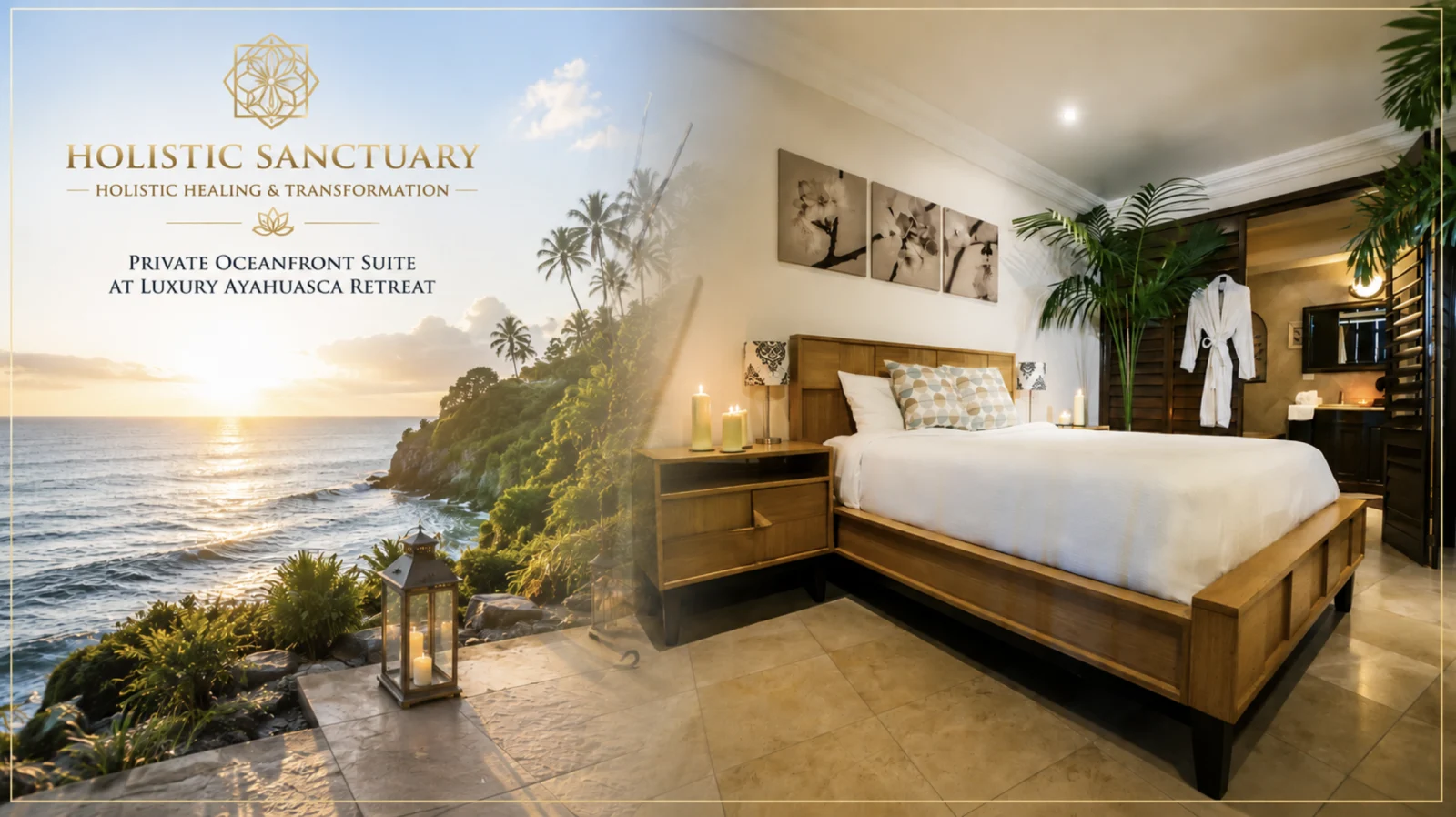
In 2007, that idea placed you far outside the mainstream. In 2011, Tabaie launched it anyway — not as an underground retreat, but inside a licensed, medically supervised facility with oceanfront accommodations, licensed nurses and physicians, and formal screening protocols. Fifteen years later, the facility reports more than 5,000 medically supervised plant-medicine ceremonies conducted under that model, representing tens of thousands of hours of hands-on clinical protocol work — and, per the facility’s internal record, zero serious adverse incidents across that entire history.
And in 2026, Eli Lilly wrote a $3.8 billion check that says the core of that 2007 hypothesis was pointed in the right direction all along.
What the Pouyan Method Actually Is
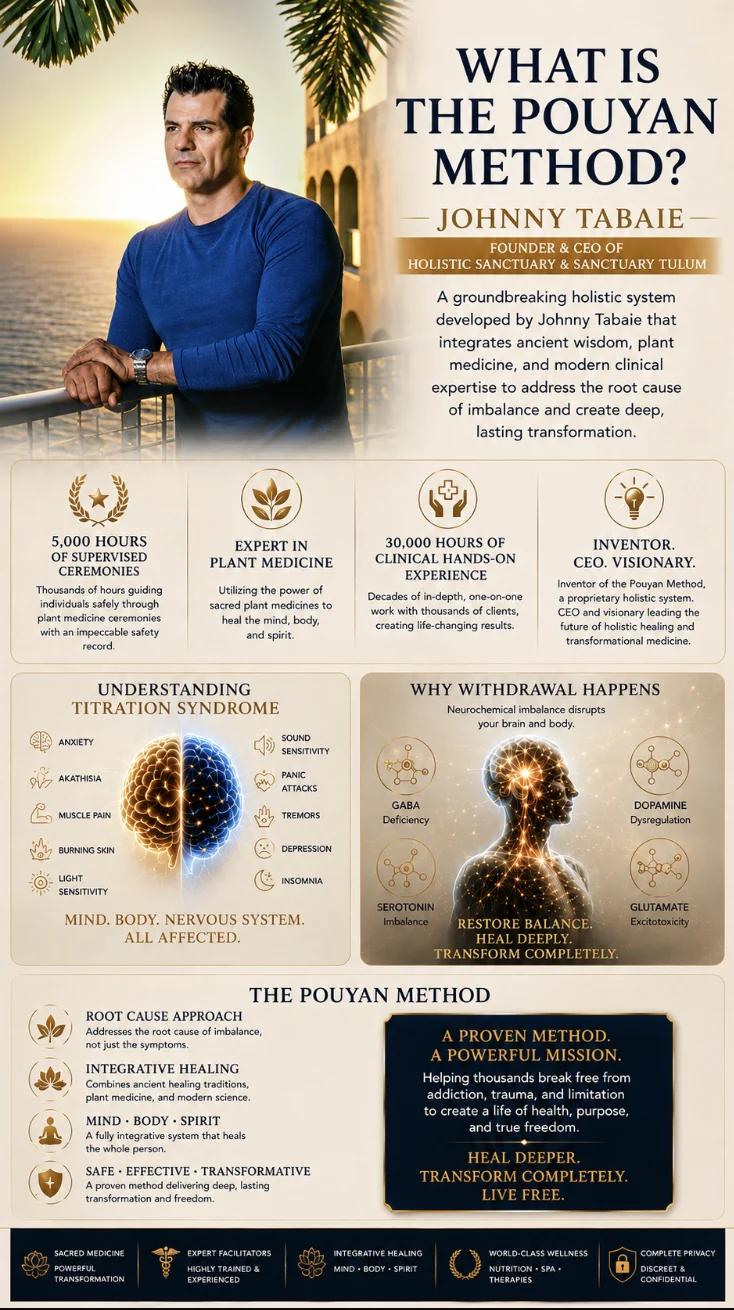
The Pouyan Method™ is the proprietary protocol Tabaie built from that hypothesis. It is not a menu of à-la-carte therapies. It is a sequenced, individualized system with three defining characteristics that separate it from essentially everything else in the treatment industry.
First: it is one-to-one, always. There are no group ceremonies, no group therapy circles, no 12-step meetings, and no requirement to identify as an addict for life. Every ceremony, every IV session, every hour of bodywork is delivered privately. Guests average more than 150 hours of one-on-one care per month — a ratio no group-model facility can structurally offer.
Second: it is medication-free by design. The protocol does not prescribe psychiatric medications, does not use substitute-maintenance drugs such as methadone or Suboxone, and does not treat symptom management as the goal. Guests who arrive on prescribed medications are tapered gradually under physician supervision — never abruptly.
Third: it is comprehensive, not a quick fix. Programs run four to twelve weeks minimum. This is a deliberate, structural rejection of the model that dominates the ibogaine and psychedelic-retreat industry: the 5-to-7-day detox, the 3-day psilocybin weekend, the fly-in-fly-out ceremony. Those models administer a powerful compound and send the guest home before the body has begun to rebuild. The Pouyan Method treats the ceremony as one component of a much longer physiological restoration — because that is what the biology of recovery actually requires.
The protocol integrates five sacred plant medicines — ibogaine, ayahuasca, psilocybin, DMT, and 5-MeO-DMT — with an intensive physiological stack: hyperbaric oxygen therapy, NAD+ and proprietary IV formulations, superfood-based nutrition, daily structured cardio, colonics and cellular detoxification, therapeutic massage, Reiki, yoga, and breathwork. Every element is calibrated to the individual after a full medical and psychiatric evaluation.
That is the method. Now for the part that matters most: what does the published science actually say about its components?
The Evidence, Compound by Compound
What follows is not marketing language. Each statement below is tied to a specific published study, with the citation. Where a finding is preliminary, we say so. Where a compound carries real risk, we say that too — because how a facility talks about risk tells you everything about how it manages it.
Ibogaine: The Opioid-Withdrawal Interrupter
Ibogaine’s most established property — the one that built its global reputation — is its capacity to dramatically reduce opioid withdrawal. A twelve-month observational study of ibogaine treatment for opioid dependence, published in The American Journal of Drug and Alcohol Abuse, followed patients after a single treatment episode and documented sustained reductions in opioid use and withdrawal severity across the follow-up year.2
More recently, the evidence expanded into territory nobody predicted. In 2024, Stanford researchers published a study in Nature Medicine — one of the most rigorous journals in clinical science — following 30 U.S. Special Operations veterans with traumatic brain injury treated with magnesium-ibogaine. The results: measurable improvements in cognitive function and clinically significant reductions in PTSD, anxiety, and depression symptoms.3
Ibogaine also carries the field’s most serious, best-documented risk: it can prolong the cardiac QT interval, which is why unscreened, unmonitored ibogaine administration has caused deaths at cut-rate clinics worldwide. This is precisely why Holistic Sanctuary treats ibogaine as a medical procedure — EKG and cardiac screening before every ceremony, continuous monitoring during, and a licensed physician on-site throughout. The risk is not a reason to avoid ibogaine. It is the reason to never receive it anywhere that treats it casually.
Ayahuasca: Rapid Antidepressant Effects in a Placebo-Controlled Trial
Ayahuasca is no longer a matter of anecdote. In a randomized, placebo-controlled trial published in Psychological Medicine, a single ayahuasca session produced rapid, significant antidepressant effects in patients with treatment-resistant depression — effects measurable within days.4 Longer-term observational work has found reductions in depressive symptoms sustained at extended follow-up in a majority of participants.
For trauma specifically, the mechanism research is compelling: ayahuasca’s active compound, DMT, acts on the serotonin 2A receptor system implicated in emotional memory processing — the same system through which psilocybin appears to enable trauma reprocessing. Clinical trials for ayahuasca in PTSD specifically remain at an earlier stage, and we describe them that way.
DMT: Significant and Lasting Effects on Depression
In a Phase IIa randomized clinical trial at Imperial College London, intravenous DMT was tested against placebo in patients with depression. The result: significantly greater reductions in depression severity than placebo, with effects persisting up to six months after treatment.5 Imperial’s psychedelic research group — one of the two most influential in the world, alongside Johns Hopkins — has also produced the neuroimaging work explaining why: these compounds temporarily quiet the brain’s default mode network, the circuit responsible for rigid, self-referential rumination, opening a window of heightened neuroplasticity in which entrenched patterns become changeable.
Psilocybin: Breakthrough Therapy Designation and Twelve-Month Durability
The psilocybin evidence is the deepest in the field. In a Johns Hopkins trial published in JAMA Psychiatry, adults with major depressive disorder received two psilocybin doses with supportive therapy: 67% showed a greater-than-50% reduction in depression symptoms at one week, and 71% at four weeks.6 The twelve-month follow-up, published in 2022, found 75% of participants still responding and 58% in full remission a year after treatment.7
The U.S. Food and Drug Administration has granted psilocybin Breakthrough Therapy designation — twice — for both treatment-resistant depression and major depressive disorder. That designation is reserved for therapies that preliminary evidence suggests may be substantially better than existing treatment.
5-MeO-DMT: The Compound Behind the $3.8 Billion Bet
5-MeO-DMT produces the shortest and most intense experience in the psychedelic pharmacopeia — and some of the most striking early data. A Johns Hopkins–affiliated study published in The American Journal of Drug and Alcohol Abuse found that 5-MeO-DMT use in a structured setting was associated with unintended improvements in depression and anxiety in roughly 80% of participants reporting those conditions.8 A European study in Psychopharmacology found a single inhalation was related to sustained increases in life satisfaction and mindfulness-related capacities, with reductions in psychopathological symptoms at follow-up.9 A formal Phase 1/2 trial of a vaporized 5-MeO-DMT formulation in treatment-resistant depression, published in Frontiers in Psychiatry, established initial safety and efficacy signals10 — the research lineage that leads directly to BPL-003 and Eli Lilly’s acquisition.
This is the compound Holistic Sanctuary has offered as a single, medically supervised, private ceremony for years — screened, monitored, and integrated into a longer protocol rather than sold as a standalone weekend experience.
The Physiological Foundation: Why the Method Is More Than Ceremonies
Here is the insight that separates the Pouyan Method from every 7-day ibogaine clinic and 3-day mushroom retreat on the market: a powerful ceremony delivered to a depleted, inflamed, nutrient-starved body is a wasted ceremony. The plant medicine opens the neuroplastic window. What the body does inside that window is determined by its physiological condition. That is what the rest of the protocol exists to optimize — and each component has its own published evidence base.
Hyperbaric Oxygen Therapy: The Best-Documented Tool in the Stack
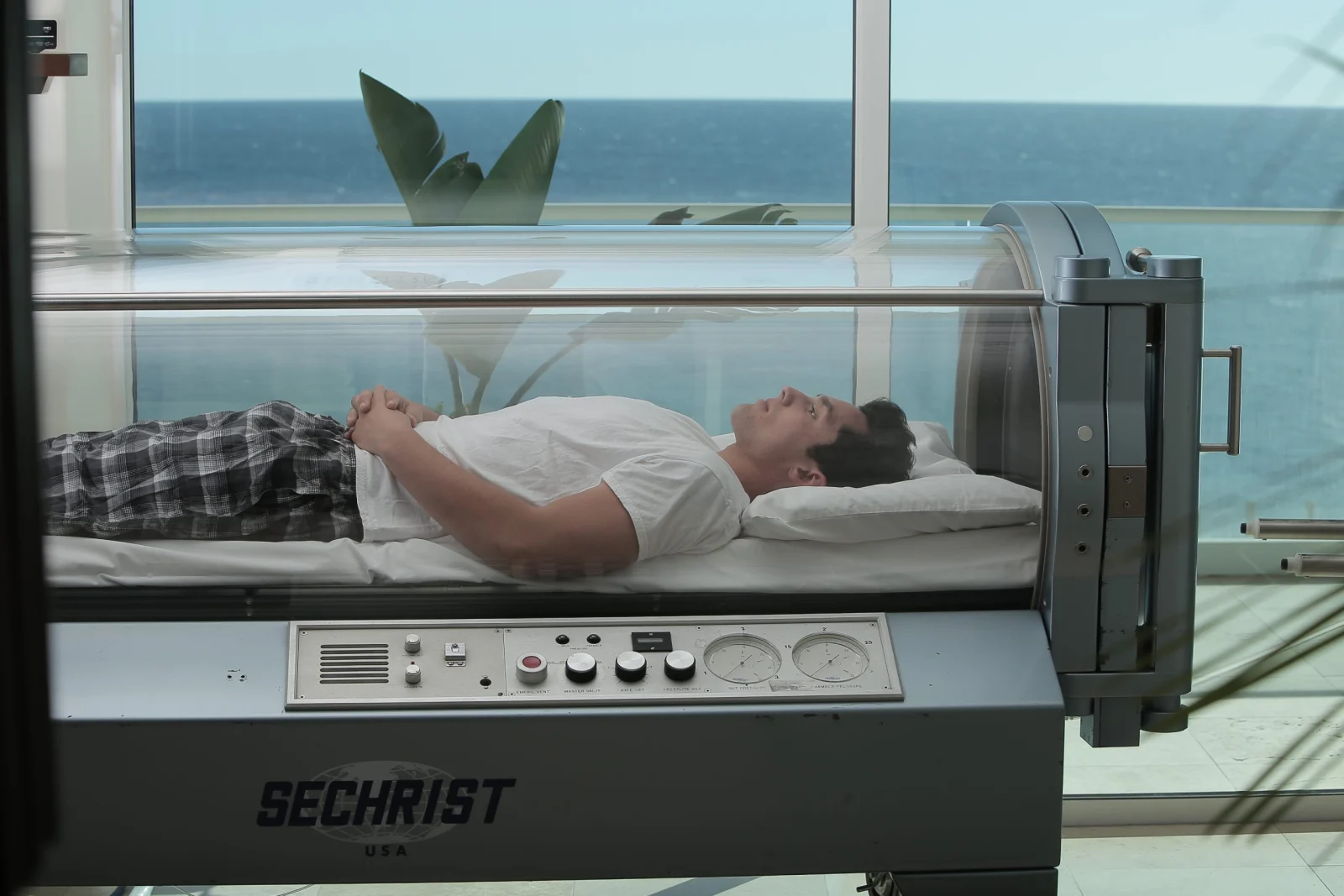
HBOT is not alternative medicine. It is an FDA-recognized medical therapy with formally approved indications, delivered daily at Holistic Sanctuary. What does the science actually say?
It treats anaerobic infection — by established medical consensus. Among HBOT’s formally recognized indications are clostridial myonecrosis (gas gangrene) and necrotizing soft-tissue infections.11 The mechanism is exactly what its name suggests: anaerobic bacteria, by definition, cannot survive in high-oxygen environments, and HBOT saturates tissue with oxygen at levels unreachable by breathing at normal pressure.
It treats radiation injury — also by established consensus. Delayed radiation injury (soft tissue and bony radionecrosis) — the tissue damage that follows cancer radiotherapy — is a formally approved HBOT indication, used in hospitals worldwide to heal what chemotherapy and radiation leave behind.11
It lengthened telomeres in a prospective human trial. In 2020, researchers at Tel Aviv University published a prospective trial in the journal Aging: sixty daily HBOT sessions in healthy older adults produced a measurable increase in telomere length of over 20% in immune cell populations, alongside a significant reduction in senescent (“aged”) cells.12 Telomeres — the protective caps on chromosomes that shorten as we age — are among the most studied biomarkers of cellular aging. Does this prove HBOT extends human lifespan? No — and we will not claim it does. Telomere length is a biomarker of aging, not a demonstrated guarantee of longevity, and this was a single trial. But it is a genuine, peer-reviewed finding from a real research group, and it is the scientific basis for HBOT’s growing role in longevity medicine.
It improved fibromyalgia in a randomized trial. A randomized controlled trial published in PLoS ONE found that a course of HBOT produced significant improvement in fibromyalgia symptoms and — remarkably — corresponding changes in brain activity on imaging, suggesting the therapy was rectifying the abnormal brain patterns associated with the condition.13
For traumatic brain injury and cognitive decline, the evidence is promising and still maturing. Multiple trials, largely from the same Israeli research group, have reported improved cognitive function and cerebral blood flow in post-stroke, post-concussion, and age-related cognitive decline populations. This research is genuinely encouraging; it is not yet settled consensus, and we describe it as what it is — an active, promising frontier.
NAD+ IV Therapy: Strong Mechanism, Emerging Clinical Evidence
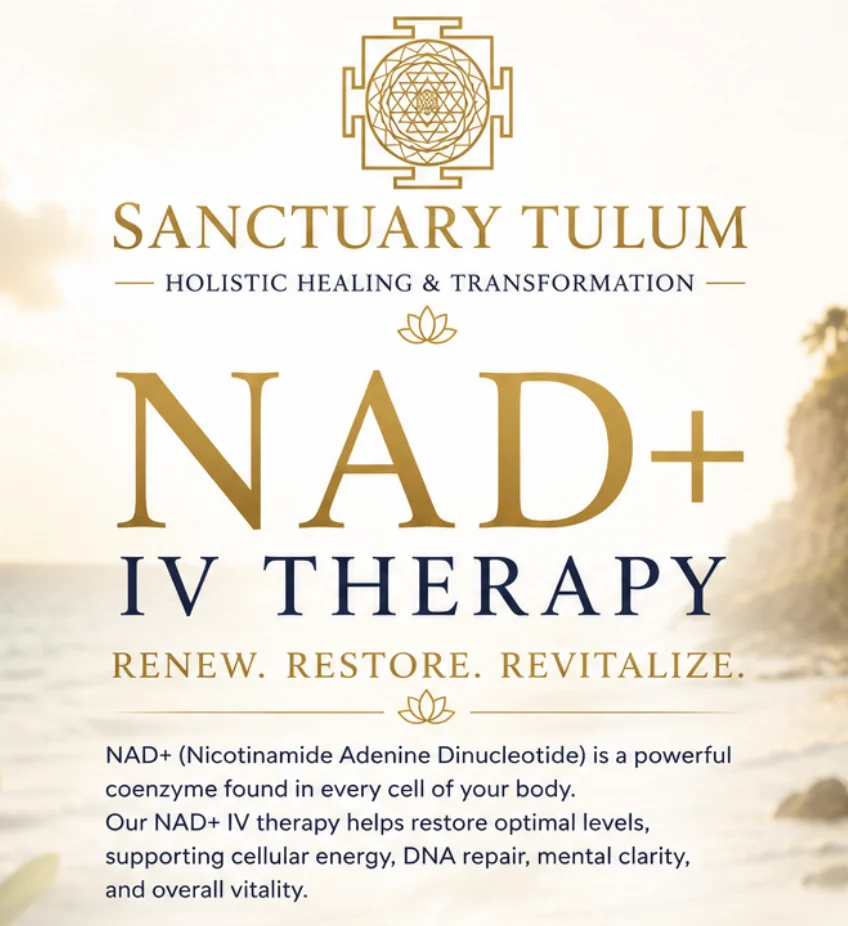
Nicotinamide adenine dinucleotide is a coenzyme present in every living cell, central to mitochondrial energy production and DNA repair; its levels decline with age and are depleted by chronic substance use. The mechanistic science is extensive and uncontroversial. The clinical-trial evidence for IV NAD+ in addiction recovery specifically is at an earlier stage — practitioner-reported outcomes are strong, controlled trials are still few — and we present it accordingly: as a physiologically rational restoration therapy within a larger protocol, not as a standalone cure for anything.
Nutrition as Clinical Infrastructure
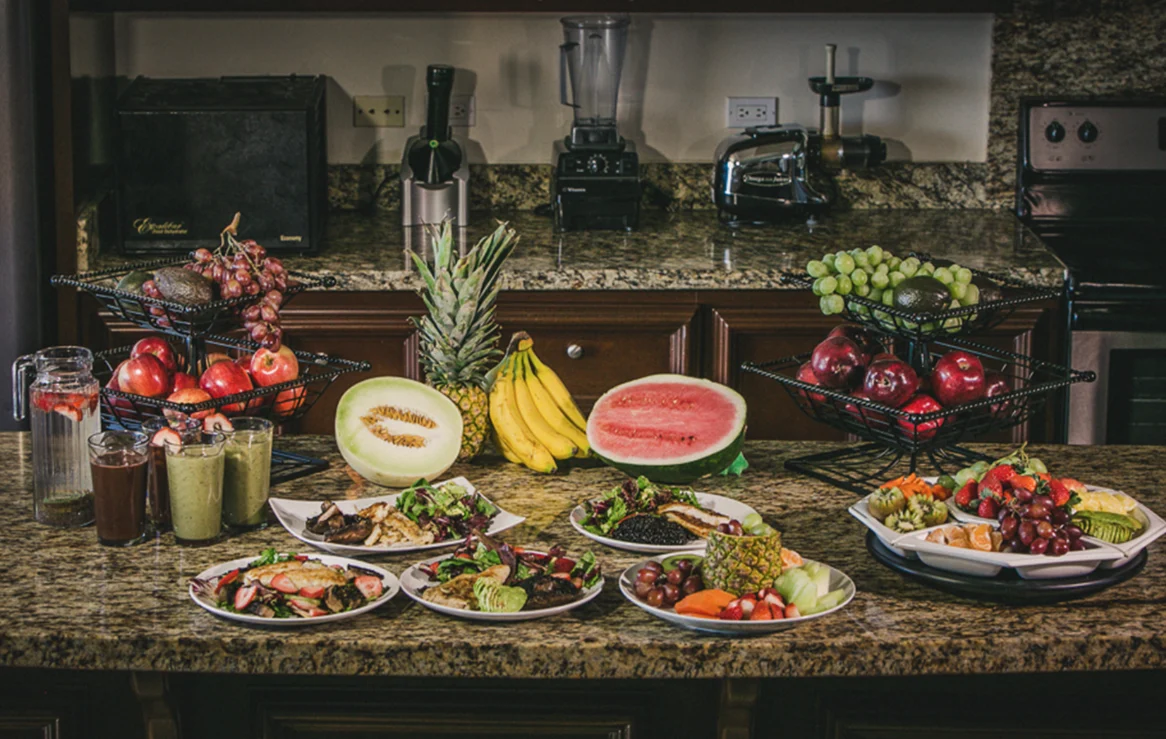
Every guest’s protocol is built on organic, whole-food nutrition: cold-pressed green juices, wheatgrass, and superfoods dense in the micronutrients — magnesium, B-vitamins, amino acid precursors — that chronic substance use systematically strips from the body. This is not spa garnish. Nutritional repletion before ceremony work is one reason the facility reports that the overwhelming majority of its ibogaine guests complete treatment without the purging and nausea that plague under-prepared clinics — and without the anti-nausea medications those clinics use, which carry their own cardiac risks during ibogaine treatment.
Regenerative Adjuncts
Protocols may also incorporate stem cell therapy, exosome therapy, and related regenerative treatments, administered by licensed physicians. Regenerative medicine for neurological and systemic recovery is one of the fastest-moving fields in clinical research — and one where evidence standards vary widely by application. We offer these therapies under physician supervision as adjuncts within a comprehensive protocol, and we do not attach disease-cure claims to them.
Why Duration Matters: Four to Twelve Weeks, Not Seven Days
Walk through the logic of the typical ibogaine clinic: fly in, brief screening, ibogaine on day two or three, recover for a day, fly home. Total exposure: five to seven days. Now hold that against what the science above actually describes.
The neuroplastic window opened by these compounds extends for days to weeks after the experience. The Johns Hopkins psilocybin protocol embedded its doses inside a structured program of preparation and integration — and its twelve-month durability numbers came from that structure, not from the molecule alone. The Stanford ibogaine study’s veterans were assessed across a full month of structured follow-up. Nothing in the published literature suggests that a compound administered to an unprepared body and abandoned after 72 hours produces durable change. Everything in it suggests the opposite: preparation and integration are where the healing consolidates.
That is the entire argument for the four-to-twelve-week model. The first weeks physically prepare the body — tapering medications safely, restoring nutrition, beginning HBOT and IV therapy. The ceremonies are sequenced at the point of maximum readiness. And the weeks after are where integration, continued physiological restoration, and daily one-on-one work turn a profound experience into a changed life. A seven-day detox is not a smaller version of this. It is a different — and, we would argue, inadequate — product entirely.
The Safety Architecture
Fifteen years of continuous operation with powerful compounds is not luck. It is architecture:
- A licensed, medically supervised facility — not an unregulated jungle retreat, and not a private home with a shaman on call.
- Full medical screening before any ceremony: bloodwork, EKG, cardiac evaluation, medication review, and psychiatric assessment. Serotonergic medications, lithium, uncontrolled cardiac conditions, and psychotic-spectrum history are absolute contraindications, screened for every single time.
- Physician oversight throughout. Medical Director Dr. Jose A. Jimenez, MD, brings more than 30 years of medical practice: board certification in surgery from the National Autonomous University of Mexico, critical-care specialization at the American British Cowdray Hospital, a Harvard Medical School certification in point-of-care musculoskeletal ultrasound, and board-elected membership in the American Academy of Regenerative Medicine.
- Gradual, supervised medication tapers — never abrupt discontinuation — for guests arriving on benzodiazepines, methadone, Suboxone, fentanyl, or SSRIs. The facility is one of few anywhere willing and equipped to accept clients on long-acting maintenance drugs and transition them safely before ceremony work.
- A reported record of more than 5,000 medically supervised ceremonies since 2011 with zero serious adverse incidents. We state this as what it is: the facility’s own operational record across fifteen years — a record built by refusing, every single time, to cut the corners that cheaper clinics cut.
Experience, Expertise, Authoritativeness, Trust — Measured Honestly
Google formalized a standard for evaluating health content: E-E-A-T — Experience, Expertise, Authoritativeness, Trustworthiness. It is worth applying that standard, honestly, to this organization.
Experience. The founder lived the failure of the conventional system personally — medicated at thirteen, more than a dozen conventional treatment attempts, a brother lost to suicide inside a licensed facility. He then spent fifteen years and a reported 30,000+ hands-on clinical hours building, measuring, and refining the alternative. Firsthand experience is the “E” Google added to its standard in 2022 precisely because it cannot be faked — and this is about as firsthand as experience gets.
Expertise. The clinical expertise is held where it should be: in licensed physicians, nurses, and a Medical Director with three decades of practice and internationally recognized credentials. The protocol expertise — the sequencing, preparation, and integration system refined across 5,000+ supervised ceremonies — is held by its creator. The two work together, and neither pretends to be the other.
Authoritativeness. The method anticipated, by more than a decade, the direction that Johns Hopkins, Imperial College, Stanford, the FDA’s Breakthrough Therapy program, and now Eli Lilly have all since taken. Being early is not the same as being authoritative — but being early and still operating, licensed, fifteen years later, while the mainstream arrives at your thesis, is a form of authority that no press release can manufacture.
Trustworthiness. Trust is earned by what an organization refuses to claim. Which brings us to the most important section of this article.
What We Do Not Claim
Read any page on this site and you will find the same discipline, because it is policy:
- We do not use the word “cure.” No legitimate clinic does. Addiction, depression, PTSD, and trauma are complex conditions with individual trajectories.
- We do not claim a 100% success rate, and we do not guarantee outcomes. Results vary case by case and person to person — our own medical disclaimer says exactly that, and it means it.
- We do not claim FDA approval. Nothing on this site has been evaluated by the FDA. Our treatments are delivered legally at licensed facilities in Mexico; we do not offer them in the United States.
- We do not present preliminary science as settled science. Where a finding comes from a single trial, an observational study, or an emerging field, we say so — in this article and everywhere else.
- We do not pretend the compounds we work with are risk-free. Ibogaine’s cardiac risk is real and published. It is the reason our screening exists, and the reason no one should ever receive these medicines outside genuine medical supervision.
What we do claim is narrower, and every element of it is documented in this article: that the components of the Pouyan Method rest on real, published, peer-reviewed science; that the method’s core hypothesis — formed in 2007 — has been progressively validated by the most credible institutions in medicine; that it is delivered inside a licensed, physician-supervised facility with a fifteen-year reported record of safe operation; and that its comprehensive, four-to-twelve-week, one-to-one, medication-free model is structurally different from — and structurally more aligned with the published science than — the seven-day detox industry it is often lazily compared to.
The Road Ahead
The next few years will bring Phase 3 results for synthetic 5-MeO-DMT, expanding psilocybin trials, and — if the current trajectory holds — the formal medicalization of compounds that were dismissed as fringe when Johnny Tabaie built a protocol around them in a licensed oceanfront facility in 2011.
When that happens, the pharmaceutical industry will sell the molecule. What it will not sell is the fifteen years of protocol experience, the preparation and integration architecture, the one-to-one model, the physiological restoration stack, and the safety record built around those molecules — one guest at a time, without a single corner cut.
That is the Pouyan Method. That is Holistic Sanctuary. And now the world is catching up.
Admissions open 24/7
References
- Eli Lilly to acquire AtaiBeckley for up to $3.8 billion — Psychedelic Alpha, July 2026. https://psychedelicalpha.com/news/breaking-worlds-largest-pharmaceutical-company-eli-lilly-acquires-5-meo-dmt-developer-ataibeckley-for-up-to-3-8-billion/
- Noller GE, Frampton CM, Yazar-Klosinski B. Ibogaine treatment outcomes for opioid dependence from a twelve-month follow-up observational study. Am J Drug Alcohol Abuse. 2018. https://pubmed.ncbi.nlm.nih.gov/28402682/
- Cherian KN, Keynan JN, et al. Magnesium–ibogaine therapy in veterans with traumatic brain injuries. Nature Medicine. 2024.
- Palhano-Fontes F, et al. Rapid antidepressant effects of the psychedelic ayahuasca in treatment-resistant depression: a randomized placebo-controlled trial. Psychological Medicine. 2019. https://pubmed.ncbi.nlm.nih.gov/29903051/
- Imperial College London. Phase IIa randomized clinical trial of DMT for depression — significant and lasting effects. 2026. https://www.imperial.ac.uk/news/articles/2026/ayahuasca-compound-has-significant-and-lasting-effect-on-depression-/
- Davis AK, Barrett FS, et al. Effects of psilocybin-assisted therapy on major depressive disorder: a randomized clinical trial. JAMA Psychiatry. 2020/2021. https://www.hopkinsmedicine.org/news/newsroom/news-releases/2020/11/psychedelic-treatment-with-psilocybin-relieves-major-depression-study-shows
- Gukasyan N, Davis AK, et al. Efficacy and safety of psilocybin-assisted treatment for major depressive disorder: 12-month follow-up. J Psychopharmacology. 2022. https://www.hopkinsmedicine.org/news/newsroom/news-releases/2022/02/psilocybin-treatment-for-major-depression-effective-for-up-to-a-year-for-most-patients-study-shows
- Davis AK, So S, Lancelotta R, Barsuglia JP, Griffiths RR. 5-MeO-DMT used in a naturalistic group setting is associated with unintended improvements in depression and anxiety. Am J Drug Alcohol Abuse. 2019. https://pubmed.ncbi.nlm.nih.gov/30822826/
- Uthaug MV, et al. A single inhalation of vapor from dried toad secretion containing 5-MeO-DMT is related to sustained enhancement of satisfaction with life and mindfulness-related capacities. Psychopharmacology. 2019. https://pubmed.ncbi.nlm.nih.gov/30982128/
- Reckweg JT, et al. A Phase 1/2 trial to assess safety and efficacy of a vaporized 5-MeO-DMT formulation (GH001) in patients with treatment-resistant depression. Frontiers in Psychiatry. 2022. https://pubmed.ncbi.nlm.nih.gov/36051197/
- Undersea and Hyperbaric Medical Society — approved indications for hyperbaric oxygen therapy, including clostridial myonecrosis, necrotizing soft-tissue infections, and delayed radiation injury. https://www.uhms.org/resources/hbo-indications.html
- Hachmo Y, Hadanny A, et al. Hyperbaric oxygen therapy increases telomere length and decreases immunosenescence in isolated blood cells: a prospective trial. Aging (Albany NY). 2020. https://pubmed.ncbi.nlm.nih.gov/33206062/
- Efrati S, et al. Hyperbaric oxygen therapy can diminish fibromyalgia syndrome — prospective clinical trial. PLoS ONE. 2015. https://pubmed.ncbi.nlm.nih.gov/26010952/
Medical disclaimer: This article describes published research findings and the facility’s reported operational history. It does not constitute medical advice, and nothing herein has been evaluated by the FDA. Holistic Sanctuary does not diagnose, treat, or cure disease. Individual results vary. All ceremonies and medical procedures are conducted under licensed medical supervision in Mexico.