
Ayahuasca Retreats California 2025
August 10, 2025
Stem Cell Therapy Cost: What You Actually Pay For
August 23, 2026
Stem cell therapy for knees is one of the most common reasons people ask about regenerative medicine. Knee cartilage repairs itself poorly, and the conventional path often runs from anti-inflammatories to steroid injections to joint replacement. Regenerative approaches sit between those steps, and the honest answer about what they achieve is more measured than most clinic websites suggest.
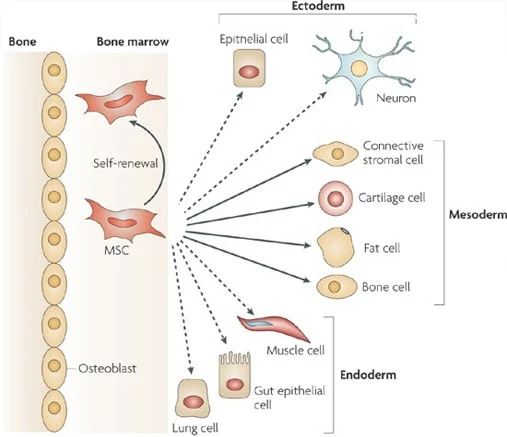
What Stem Cell Therapy for Knees Involves
The procedure is an injection into the joint space, guided by ultrasound or fluoroscopy so the material reaches the intended area. Cells may be drawn from your own bone marrow or adipose tissue, or sourced from screened umbilical cord tissue. The session usually takes under an hour and most people walk out the same day.
At Holistic Sanctuary, regenerative work is preceded by a full medical workup and delivered under physician supervision at our licensed facility. Nobody is treated on the day they enquire.
What the Evidence Currently Supports
Research on stem cell therapy for knee osteoarthritis is promising but still developing. A 2024 systematic review and meta-analysis of 18 randomised controlled trials in Frontiers in Endocrinology concluded that mesenchymal stem cells may relieve pain and improve function in osteoarthritis. What the literature does not establish is durable cartilage regeneration in the way the phrase is often marketed. Anyone telling you the joint will be rebuilt is going beyond the evidence. The FDA has stated that evidence does not currently support stem cell use beyond blood and immune system reconstitution.
That distinction matters. Reduced pain and improved function are real outcomes worth pursuing. They are not the same claim as reversing arthritis, and we will not make the second one.
Who Tends to Be a Candidate
- Mild to moderate osteoarthritis rather than bone-on-bone collapse
- Pain that has not responded to physiotherapy or conservative care
- People exploring options before considering joint replacement
- No active infection and no uncontrolled underlying condition
Advanced structural damage is generally not suitable for injection-based treatment, and a clinic willing to treat anyone who pays is a clinic worth leaving.
Questions Worth Asking Any Provider
- Is the treating clinician a licensed physician, and are they present for the procedure?
- Where is the cell material sourced, and how is it screened?
- Is imaging used to guide the injection?
- What does the provider say the treatment cannot do?
That last question is the most revealing one you can ask.
Frequently Asked Questions
How long before I notice a difference?
Reported improvement is usually gradual over six to twelve weeks rather than immediate, as inflammation settles and tissue responds.
Is stem cell therapy for knees painful?
The injection is generally well tolerated with local anaesthetic. Joint soreness for a few days afterwards is common.
Will it prevent a knee replacement?
It may delay one for some people. It cannot be promised, and anyone promising it is overstating what is known.
Read more about our approach on the stem cell therapy page, or about how to identify a legitimate clinic.

References
- Relative efficacy and safety of mesenchymal stem cells for osteoarthritis: a systematic review and meta-analysis of randomized controlled trials — Frontiers in Endocrinology, 2024 (NIH/PMC)
- FDA puts company on notice for marketing unapproved stem cell products for treating serious conditions — U.S. Food and Drug Administration
- Stem Cell and Exosome Products — Centers for Disease Control and Prevention