Is Ibogaine Safe? The Honest Answer From 15 Years of Doing It Right
August 29, 2026
Medically supervised ibogaine treatment — continuous monitoring, licensed facility, 15-year gold standard. Explore the program.

What is ibogaine? Ibogaine is a naturally occurring psychoactive alkaloid extracted from the root bark of Tabernanthe iboga, a shrub native to the rainforests of Central West Africa. In a single supervised session it has been observed to interrupt opioid withdrawal, quiet cravings, and open a waking-dream state that people consistently describe as a review of their entire life.
It is one of the most fascinating molecules in medicine — and one of the most misunderstood. This guide explains what ibogaine is, where it comes from, how it works, what it is used for, what the science actually says, and what separates a safe treatment from a dangerous one.
What Is Ibogaine? The Direct Answer
Ibogaine is the principal psychoactive compound of the iboga plant. For centuries, the Bwiti spiritual tradition of Gabon has used iboga root bark in initiation ceremonies — a sacred rite of passage in which initiates confront their history, their ancestors, and themselves.
The Western story begins in 1962, when a 19-year-old named Howard Lotsof, then dependent on heroin, took ibogaine expecting a new high. Thirty-six hours later he noticed something impossible: he was not in withdrawal, and he did not crave the drug. Lotsof spent the rest of his life trying to bring that observation to medicine.
So what is ibogaine, chemically? It is classified as an oneirogen — from the Greek for “dream creator” — rather than a classic hallucinogen. At therapeutic doses it produces a dream-like state of deep memory and insight while the person remains still, typically lying down with eyes closed. It is not recreational. Nobody parties on ibogaine. The experience is long, physically demanding, and profoundly introspective — which is precisely why it is administered in medical settings, not living rooms.
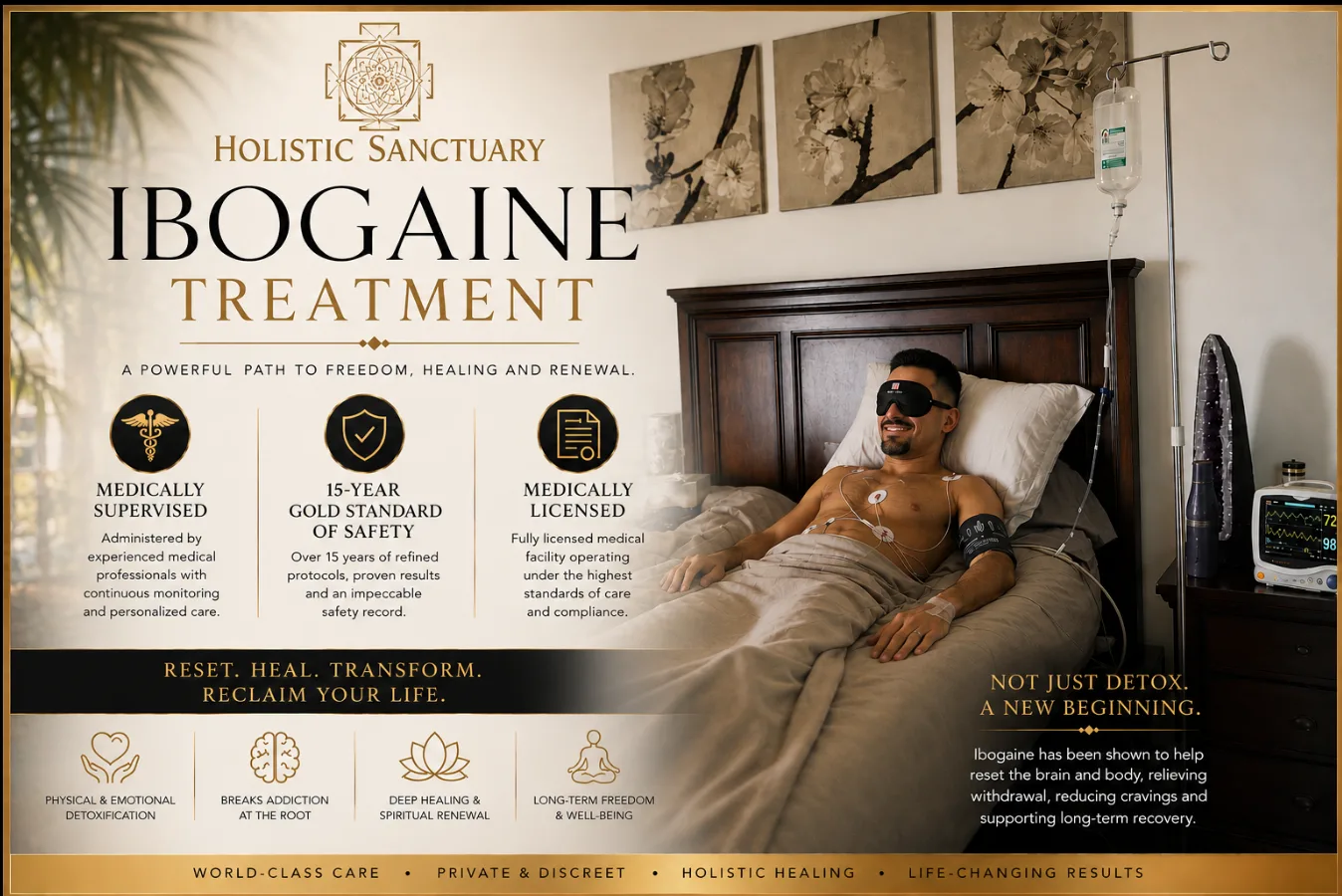
Medically supervised ibogaine treatment — continuous monitoring, licensed facility, 15-year gold standard. Explore the program.
How Does Ibogaine Work?
Ibogaine is pharmacologically promiscuous — it touches many systems at once, which is why researchers find it so compelling and so complex. It interacts with opioid, serotonin, sigma, and NMDA receptor systems simultaneously, and this multi-target action is believed to underlie its signature effect: the interruption of opioid dependence at the receptor level rather than the slow taper substitution model of methadone or buprenorphine.
So how does ibogaine work at the receptor level? Two mechanisms deserve special attention. First, the body converts ibogaine into noribogaine, a long-acting metabolite that remains active for weeks and is associated with the extended reduction in craving that people report long after the session ends (Mash et al., Frontiers in Pharmacology, 2018). Second, preclinical research has linked ibogaine to increased expression of neurotrophic factors such as GDNF — proteins involved in the growth and repair of neurons — which is one reason the conversation around ibogaine now extends far beyond addiction into brain health itself.
In 2024, Stanford Medicine researchers published results in Nature Medicine from thirty US Special Forces veterans treated with magnesium-supported ibogaine for traumatic brain injury and its psychiatric aftermath. One month after treatment, the veterans showed marked improvements in disability ratings, PTSD, depression, and anxiety — results the lead investigator described as unlike anything seen with a single treatment (Cherian et al., Nature Medicine, 2024).
Where Does Ibogaine Come From? From Sacred Initiation to the Research Lab
The Bwiti of Gabon never called iboga a drug. In their tradition it is the great teacher — taken once, at initiation, in a ceremony that can last days, surrounded by community, music, and elders who have walked the same road. Western science stumbled onto the molecule sideways: French pharmacologists isolated ibogaine from the root bark around 1901, and for decades it appeared in France as an obscure stimulant tonic before fading into pharmacological footnotes.
Then came Lotsof’s 1962 accident — a heroin-dependent teenager who woke up free of withdrawal — and everything changed. Lotsof patented ibogaine’s use for addiction interruption in the 1980s, lobbied the National Institute on Drug Abuse through the 1990s, and watched official development stall on cardiac concerns and Schedule I politics while an underground and offshore treatment world grew in its place.
He died in 2010, decades before vindication arrived: today Stanford publishes veterans data in Nature Medicine, Texas has committed $50 million in public funding toward ibogaine clinical research, and the molecule the establishment shelved is now one of the most watched compounds in psychiatry. The tradition was right about one thing all along — this medicine teaches. The question was never whether it works on people; it was whether medicine would do the work of delivering it safely.
What’s Next for Ibogaine Research?
Follow the money and the pipeline tells you the future. Pharmaceutical researchers are engineering synthetic analogs of ibogaine — molecules built to keep the anti-addictive and neuroplastic effects while deleting the visionary experience and the cardiac signal. We watched the same play run with 5-MeO-DMT, a medicine we have administered under supervision for fifteen years while industry ignored it — right up until it could be synthesized and patented. Perhaps the analogs will help many people, and we hope they do.
But those of us who sit with this medicine hold a different view: the life review is not a side effect to be engineered away. It is the mechanism. The confrontation with your own history — witnessed, understood, forgiven — is what people carry out of the session and build a new life on. Chemistry can quiet a receptor; it cannot show a man the moment his addiction began and let him forgive the person he was. That is what ibogaine does, and it is why the authentic medicine, delivered with authentic safety, will always matter.
What Is Ibogaine Used For?
When people ask what is ibogaine used for, four applications dominate the clinical and research conversation. Opioid detoxification is the most established: observational studies of medically screened patients report that a single ibogaine session can substantially reduce or reduce acute withdrawal and support transitions from dependence to abstinence (Brown & Alper, American Journal of Drug and Alcohol Abuse, 2018). Trauma and PTSD form the fastest-growing frontier, led by the Stanford veterans data. Alcohol and stimulant dependence follow, with smaller bodies of evidence. And a fourth application — deep psychological reset for depression, anxiety, and burnout — is where clinical observation currently runs ahead of published trials.
Honesty requires a sentence the marketing industry hates: no medicine cures addiction, and anyone who promises a cure is selling you something. What the evidence supports is narrower and still remarkable — ibogaine can interrupt the physical machinery of dependence and open a window of clarity. What a person builds inside that window, with proper preparation, integration and aftercare, is where recovery actually happens.
What Does an Ibogaine Session Actually Feel Like?
The session unfolds in phases across 24 to 36 hours. The first phase is the visionary phase: within an hour or two of dosing, a panoramic life review begins — memories, often from childhood, replayed with startling detail and emotional truth. People consistently describe watching the origins of their pain rather than merely remembering them.
The second phase is introspective: the visions quiet, and hours of deep cognitive processing follow, in which the material of the first phase gets examined, understood, and — for many — forgiven. The third phase is the temporary window: in the days and weeks that follow, with noribogaine still active, cravings stay quiet, sleep deepens, and the mind remains unusually open — the period when integration work, done properly, turns an experience into a changed life.
Physically, the experience demands stillness. Movement is uncomfortable, light and sound feel amplified, and the body wants to lie motionless in a dark, quiet room. This is why the setting matters so much: a private suite, continuous monitoring, and a medical team in the room are not luxuries — they are the conditions the medicine itself requires.
What Are the Risks of Ibogaine? The Truth Nobody Should Hide
Ibogaine is a serious cardioactive medicine. It can prolong the Q–T interval — the electrical reset window of the heartbeat — creating genuine arrhythmia risk in vulnerable hearts (Koenig & Hilber, Molecules, 2015). A 2016 toxicology review found that reported fatalities consistently involved pre-existing cardiac conditions, drug interactions, or dosing outside medical settings (Litjens & Brunt, Clinical Toxicology, 2016) — and the most recent multisite mortality data shows deaths concentrated in people dosed during active opioid detox, exactly what compressed 5-to-10-day programs do.
Read that carefully, because it is the entire safety story in one line: the danger is not evenly distributed. It concentrates in unprepared bodies and unscreened settings. Screened, prepared, monitored — the published evidence says the risk can be managed with discipline. We wrote a full, cited examination of this exact question: Is ibogaine safe?
What Is the Difference Between Ibogaine, Iboga, and Noribogaine?
The three terms get confused constantly, so here is the clean distinction. Iboga is the whole plant — the root bark used in Bwiti ceremony, containing ibogaine alongside a dozen other alkaloids. Ibogaine is the single purified alkaloid used in clinical and therapeutic settings, where dosing can be measured to the milligram against body weight and cardiac screening.
Noribogaine is what your liver makes from ibogaine — the long-acting metabolite that keeps working on craving and mood for weeks after the visionary experience ends. When people ask what ibogaine is compared to iboga, the shortest answer is: iboga is the tradition; ibogaine is the medicine; noribogaine is the echo that keeps healing after the session.
Is Ibogaine Legal?
In the United States, ibogaine is a Schedule I controlled substance — illegal to administer despite the growing research, though states like Texas have begun funding clinical research toward changing that. In Mexico, ibogaine is unscheduled, which is why the serious medical facilities operate there. Legality alone tells you nothing about safety; a licensed, physician-supervised facility does. The full picture, country by country, is in our guide to where ibogaine is legal.
Why Is All of America Suddenly Talking About Ibogaine?
For decades, ibogaine lived on the margins — a medicine veterans whispered about and regulators refused to touch. That era just ended. On April 18, 2026, the President signed an Executive Order on accelerating treatments for serious mental illness that names ibogaine compounds explicitly — directing the FDA and DEA to build a Right to Try access pathway for eligible patients and committing at least $50 million in federal research funding.
Days later, the FDA announced it had cleared the first-ever US clinical study of an ibogaine derivative — noribogaine, the very metabolite described above — and the FDA Commissioner told CNN that priority vouchers would compress review timelines from a year to one or two months. Texas had already moved first, committing $50 million of state money to FDA-supervised ibogaine trials — the largest state-funded psychedelic research program in American history.
None of this came from a pharmaceutical marketing department. It came from veterans. VETS — the nonprofit founded by Navy SEAL Marcus Capone and his wife Amber — has now helped more than 1,400 veterans reach ibogaine treatment, and the Stanford research that grew out of their work reported PTSD, depression, and anxiety reductions above eighty percent, with most participants no longer meeting PTSD diagnostic criteria a year later.
Netflix told their story to the world in the documentary In Waves and War. Robert O’Neill — the SEAL who led the bin Laden raid — put his advocacy in nine words: “Put an ibogaine clinic in every damn VA hospital.”
The conversation has gone fully mainstream. Former Texas Governor Rick Perry — a lifelong drug-war conservative — sat with Joe Rogan and called ibogaine “the most sophisticated medication on the planet,” and returned in 2026 alongside W. Bryan Hubbard, CEO of Americans for Ibogaine, for a second Rogan conversation
Here is the honest heart of it all: science is still mapping exactly how ibogaine does everything it does — but between the White House, Stanford, and thousands of veterans who got their lives back, America has stopped arguing about whether it works and started racing to deliver it safely.

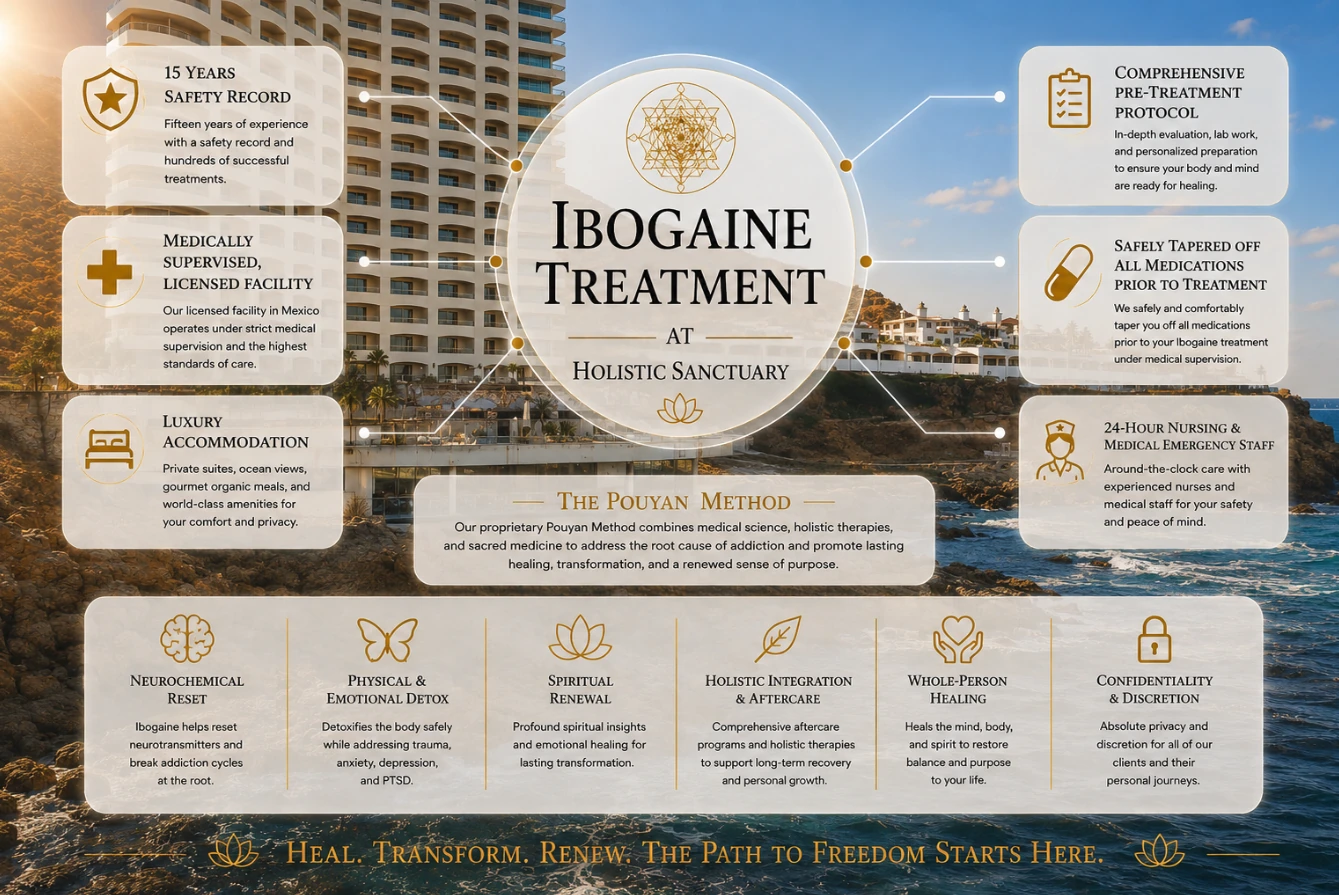
That last word — safely — is where we come in. While Washington spent decades debating, Holistic Sanctuary spent fifteen years building what the country is only now trying to create: a licensed sanctuary where ibogaine is delivered inside a complete healing architecture.
Sacred medicine paired with modern clinical care — NAD+ brain restoration, hyperbaric oxygen, red light therapy, oceanfront stillness, organic nourishment, one guest at a time — each element chosen to prepare the body, deepen the medicine, and protect the transformation it opens. Our guests consistently describe it the same way: not a treatment they received, but the moment their life turned. That is what this medicine can be when it is honored — and it is the only way we have ever offered it.
What Does Ibogaine Treatment Look Like When Done Right?
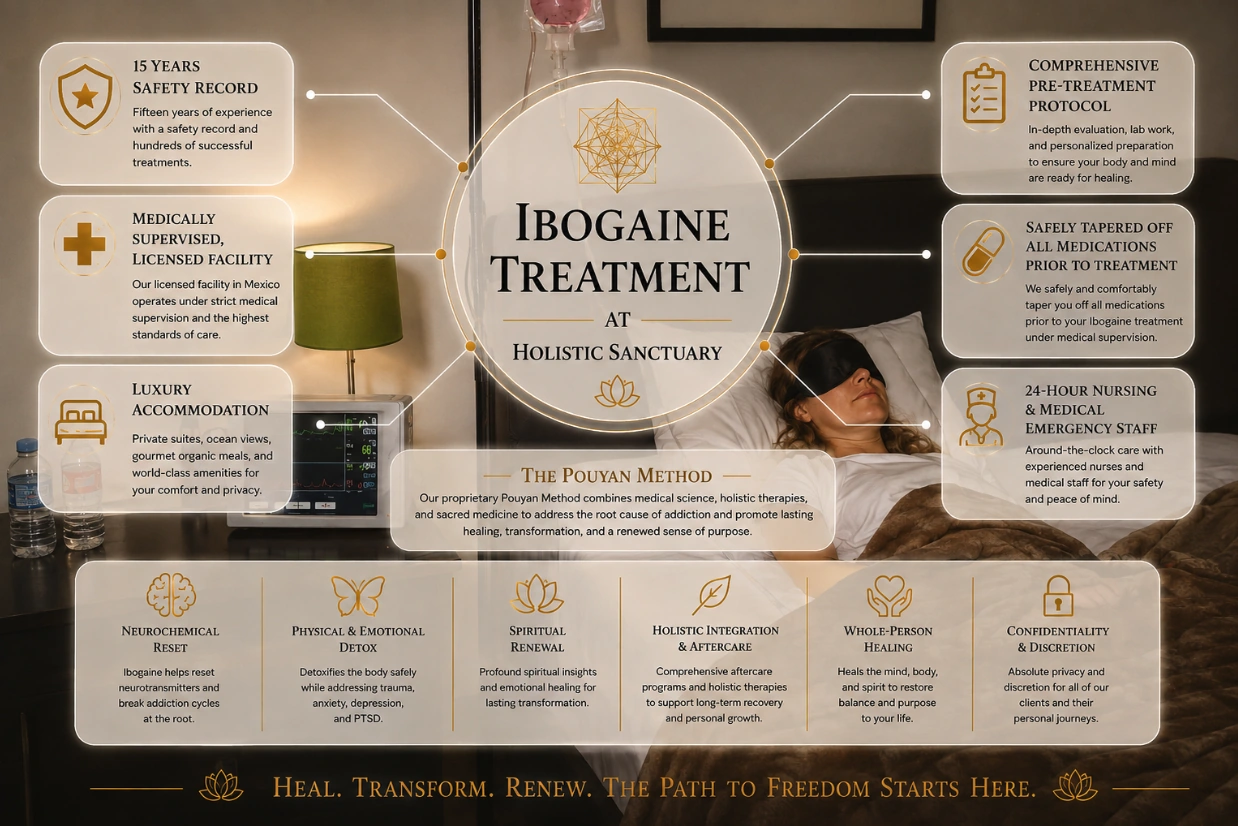
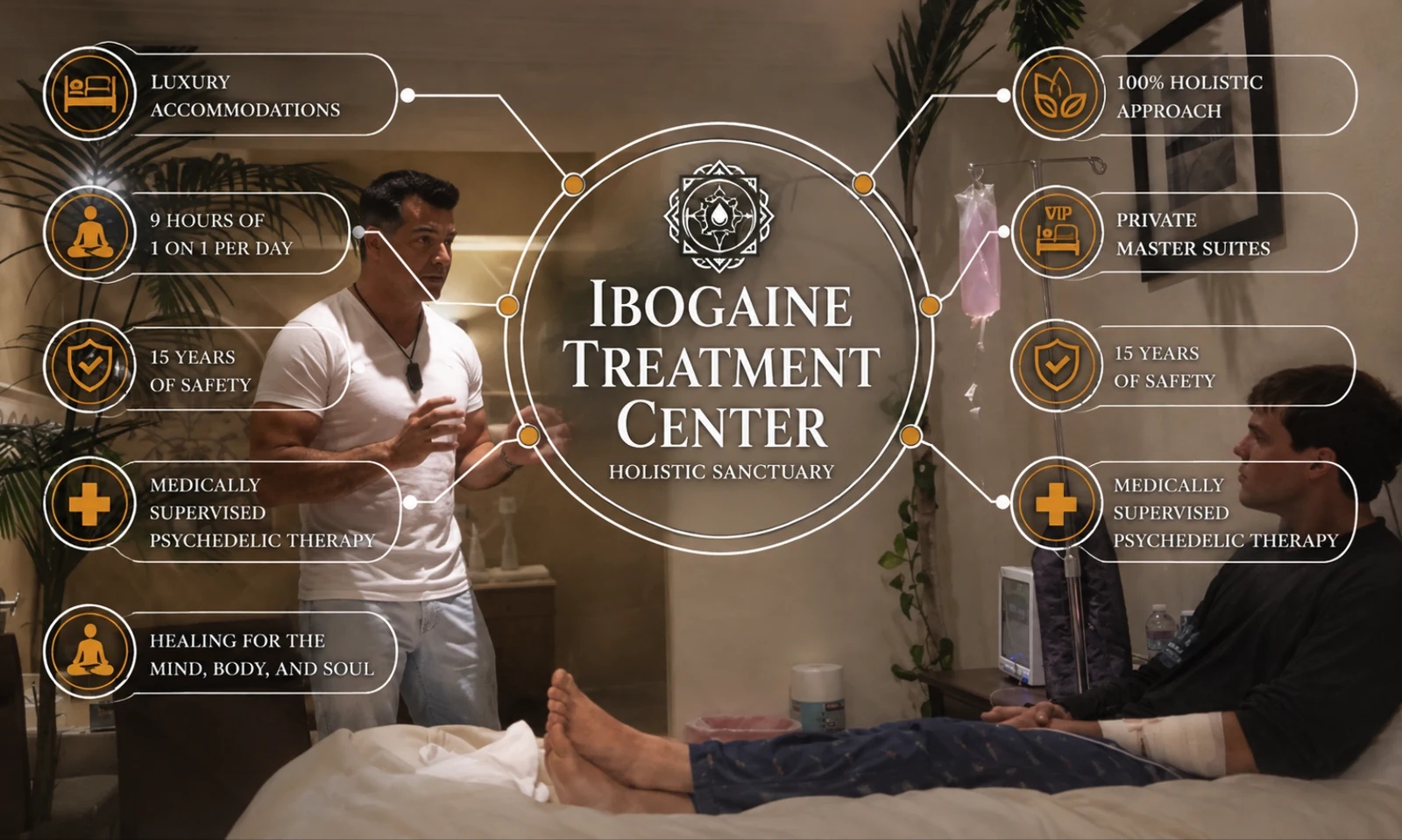
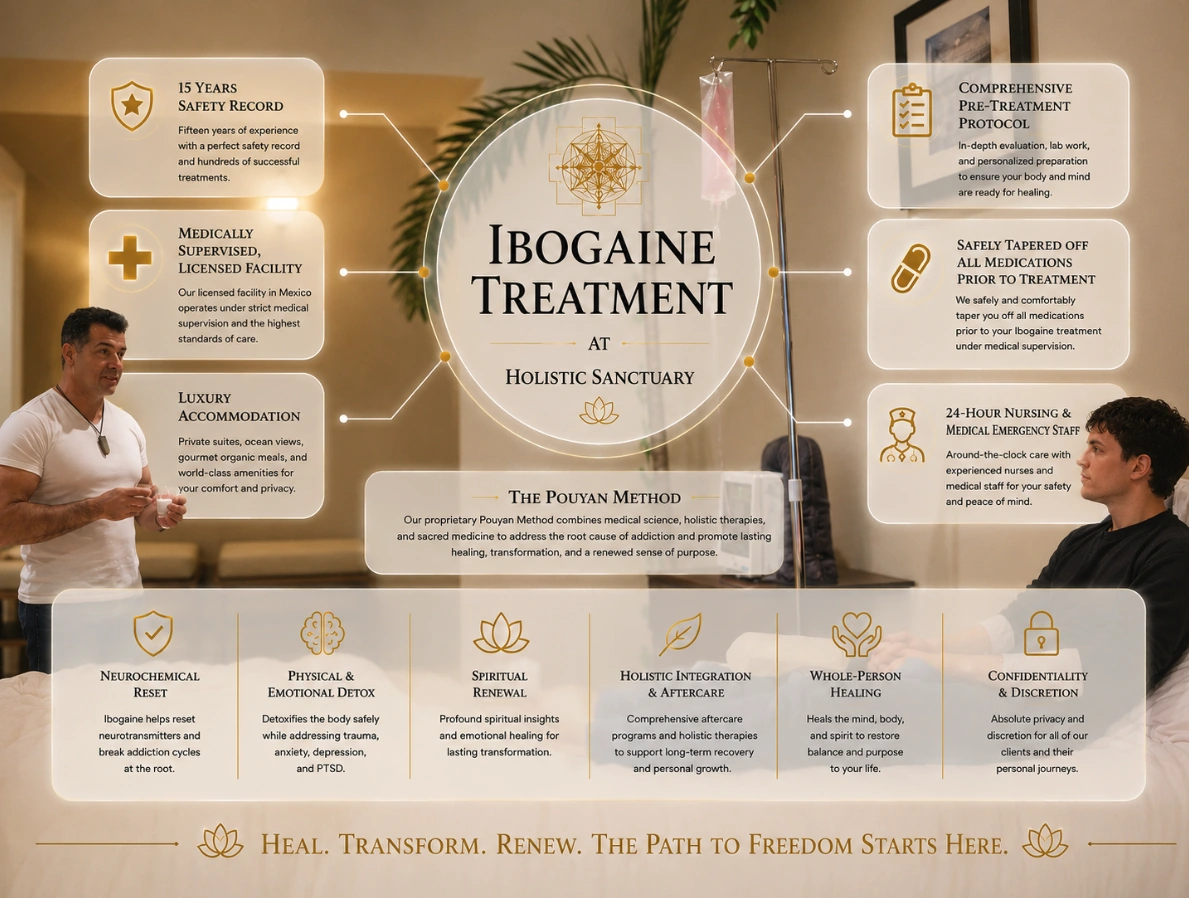
Understanding what ibogaine is leads directly to the question that actually protects your life: what does responsible treatment look like? After fifteen years of administering this medicine inside a licensed facility, our answer has never changed — preparation is the treatment. Comprehensive labs, an EKG and a cardiac stress test on our own equipment.
Physician-supervised tapering off interacting medications before the medicine is ever discussed. Weeks of strengthening the body — NAD+ IV therapy, hyperbaric oxygen, red light, clean organic nutrition — so the system meeting the medicine is strong enough to receive it. Cardiac clearance repeated immediately before dosing. Three to five nurses per shift and a physician present, one guest per session, never a group.
That architecture is the proprietary Pouyan Method™ — and it is the opposite of the 7-day quick-fix model sold across Mexico for $5,000 to $10,000, which compresses screening, skips preparation, and doses people days after their last use: the exact scenario the mortality data warns about. We refuse to operate that model. If safety takes twelve weeks, we take twelve weeks.
Frequently Asked Questions About Ibogaine
What is ibogaine in one sentence?
Ibogaine is a psychoactive alkaloid from the African iboga plant that, under medical supervision, can interrupt opioid withdrawal and produce a therapeutic waking-dream state associated with deep psychological insight.
What is ibogaine used for?
Primarily opioid detoxification and, increasingly, trauma and PTSD — with the 2024 Stanford veterans study in Nature Medicine marking the strongest clinical signal to date. Alcohol dependence, stimulant dependence, and treatment-resistant depression are active areas of clinical practice and research.
How long does ibogaine stay in your system?
The acute experience lasts 24 to 36 hours, but the active metabolite noribogaine continues working for weeks — which is why cravings often stay quiet long after the session and why integration during that window matters so much.
Does ibogaine treats the root causes of addiction?
No medicine cures addiction — walk away from anyone who says otherwise. Ibogaine can interrupt physical dependence and open a window of clarity; lasting recovery is built inside that window through preparation, integration, and honest aftercare.
Is ibogaine a psychedelic like psilocybin or ayahuasca?
It is usually grouped with psychedelics, but it behaves differently: it is an oneirogen that produces a dream-like life review rather than classic visual hallucination, it lasts far longer, and it carries cardiac considerations the classic psychedelics do not.
Is ibogaine dangerous?
It can be — in unscreened bodies and unsupervised settings, where the fatality reports concentrate. With repeated cardiac clearance, corrected electrolytes, completed medication tapers, and continuous monitoring in a licensed facility, the published evidence indicates the risk can be managed with discipline. The full cited analysis is in our safety guide.
How much does ibogaine treatment cost?
Quick-fix clinics charge $5,000–$10,000 for compressed programs; comprehensive medically supervised programs are a different category entirely, because preparation, staffing, and clinical therapies cost real money. Our honest breakdown of ibogaine cost shows exactly what the price buys.
Where can I get ibogaine treatment legally?
In a licensed, physician-supervised facility in a country where ibogaine is unscheduled — Mexico being the established destination. Start with our medically supervised ibogaine treatment program.
How is ibogaine different from methadone or Suboxone?
Methadone and buprenorphine are substitution therapies — daily opioids that manage dependence indefinitely. Ibogaine is an interruption approach: a single supervised session intended to reset the dependence machinery itself, followed by a window in which the person rebuilds without any daily opioid at all. Substitution manages; interruption, when it holds, ends the arrangement.
The Bottom Line on Ibogaine
So — what is ibogaine? A century-old sacred medicine, a molecule modern science is racing to understand, and one of the most closely studied tools available for interrupting addiction and trauma — powerful enough that it demands respect, preparation, and real medical supervision. For fifteen years we have administered it the authentic way: prepared bodies, screened hearts, one guest at a time, inside a licensed facility. If this medicine is calling you, do it right or not at all. Call or WhatsApp +1-323-612-9904 — private, 24/7.
References & Citations
- The White House — Executive Order: Accelerating Medical Treatments for Serious Mental Illness (April 18, 2026)
- US FDA — FDA Accelerates Action on Treatments for Serious Mental Illness Following Executive Order
- CNN — Ibogaine Is Drawing New Interest From the Administration: What to Know
- TIME Magazine — The Gripping Story Behind Netflix’s In Waves and War
- Fox News — Ibogaine: The Fight of a Lifetime — the Psychedelic Helping Hurting Heroes
- Office of the Governor of Texas — Governor Abbott Signs Ibogaine Treatment Research Law (SB 2308)
- Stanford Medicine — Ibogaine Effectively Treats Traumatic Brain Injury in Special Ops Veterans
- Nature Medicine — Cherian et al., Magnesium–Ibogaine Therapy in Veterans With Traumatic Brain Injuries (2024)
- VETS — Veterans Exploring Treatment Solutions: Stanford Ibogaine Research
- Americans for Ibogaine — Public Policy Education & Advocacy
- The Joe Rogan Experience #2477 — Rick Perry & W. Bryan Hubbard, CEO of Americans for Ibogaine
- Mash et al. — Ibogaine Detoxification Transitions, Frontiers in Pharmacology (2018)
- Brown & Alper — Treatment of Opioid Use Disorder With Ibogaine, Am J Drug Alcohol Abuse (2018)
- Koenig & Hilber — The Anti-Addiction Drug Ibogaine and the Heart, Molecules (2015)
- Litjens & Brunt — How Toxic Is Ibogaine?, Clinical Toxicology (2016)