
Meet Johnny Tabaie: The Patient Who Went Through Seventeen Rehabs and Then Built His Own
He is not a doctor, and he has never once pretended to be. What he is, is the only person in the building who has been on the other side of every door in it.
Written by Johnny Tabaie, Founder & Director of Operations · Medically reviewed by Dr. Jose A. Jimenez, MD, Medical Director
Published · Last medically reviewed
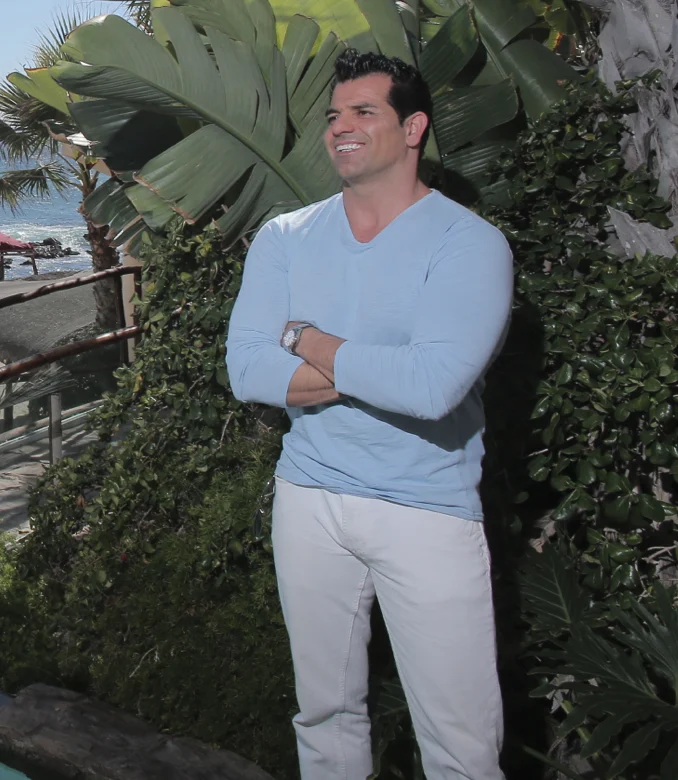
Thirteen
He was thirteen the first time a doctor wrote him a prescription for something that was supposed to fix how he felt. Four decades later he is still in the same fight, from the other side of it. That is forty years of continuous, personal, unwanted expertise in what this system does to a person — not forty years of studying it from an office.
What followed the first prescription was the thing that follows a lot of first prescriptions. Another one. Then a different one, because the first stopped working. Then something to manage what the second was doing. By the time he was an adult he had a file, a diagnosis history, and a dependency that had been built, dose by dose, inside the treatment system rather than outside it.
Seventeen
Seventeen treatment centers. That is the count, and it is not a figure of speech.
Some were cheap and some were extraordinarily expensive. Some had ocean views. Nearly all of them ran the same architecture underneath the decor: a group room, a curriculum, a twenty-eight-day clock, and a discharge date that had been decided before anyone met him. He would sit in a circle of eleven other people and be handed the same material as the other eleven, and then he would leave on schedule whether or not anything had changed.
He is careful about this part, because it would be easy and cheap to turn seventeen failures into a marketing story about how everyone else is a fraud. That is not the claim. Group work and step programs genuinely help a great many people, and anyone who says otherwise is selling something. The claim is narrower and, he thinks, harder to argue with: none of those seventeen programs was ever built for one person. They were built for a room. And he kept being a person in a room.
The Loss That Ended the Argument
His brother did not survive.
He died by suicide while he was inside a licensed treatment facility — a place with a staff, a schedule, a locked door, and a program. Every safeguard the industry advertises was in place, and none of it reached him.
There is no version of this page where that fact is used as a selling point, so it will not be. It is here because it is the hinge. Before it, the question was whether the system could be navigated more skillfully. After it, the question was whether the system was built wrong at the root — whether a model that processes people in groups on a fixed clock can ever catch the one person in the room who is quietly disappearing.
2007: The Hypothesis
The idea that eventually became the protocol was formed in 2007, and at the time it was close to indefensible in polite company.
The proposition was that some of the compounds the field had spent decades treating as pure liability — ibogaine, ayahuasca, 5-MeO-DMT — might, under medical supervision and in the right sequence, do something that daily maintenance medication was structurally incapable of doing. In 2007 that view got you called reckless. In July 2026, Eli Lilly agreed to acquire AtaiBeckley for up to $3.8 billion, with a synthetic 5-MeO-DMT nasal spray as the centerpiece of the deal.1
He is emphatic that this is not vindication of his protocol. It is vindication of a direction. Nobody has run a randomized controlled trial on what happens here, and he will say that to your face before you book.
2011: Building the Eighteenth
Four years separate the idea from the opening, and that gap is the most revealing thing about him. He could have run ceremonies in a rented villa in 2007. Plenty of people did, and some of them are still doing it.
Instead he spent those years on licensing, on finding a physician willing to attach his name and license to the work, and on the parts nobody photographs: cardiac screening protocols, emergency procedures, what happens at three in the morning when something goes sideways. Dr. Jose A. Jimenez, MD came on as Medical Director, and still reviews and clears every client before treatment begins. That arrangement is not a formality bolted on afterward — it was a precondition of opening at all.
The facility has been operating since 2011. The full account of what was built and why is on the About Holistic Sanctuary page.
The Thing He Refuses to Stop Saying
Johnny Tabaie is not a physician. He does not hold a medical degree, he does not prescribe, and he does not perform medical procedures. His title is Founder & Director of Operations, and he has turned down every suggestion over the years to soften that into something that sounds more clinical.
His reasoning is that the not-being-a-doctor is the point. The person who designed the sequence is the person who was failed by seventeen versions of the alternative, and the medicine is supervised by someone who actually went to medical school. Blurring that line would cost the one thing he thinks this place has that cannot be bought.
He is also unwilling to overstate what ibogaine can do. The published twelve-month follow-up work on ibogaine for opioid dependence is observational, and observational is not the same as proven.2 He wants people arriving here to know the difference before they arrive, not after.
The Name on the Protocol
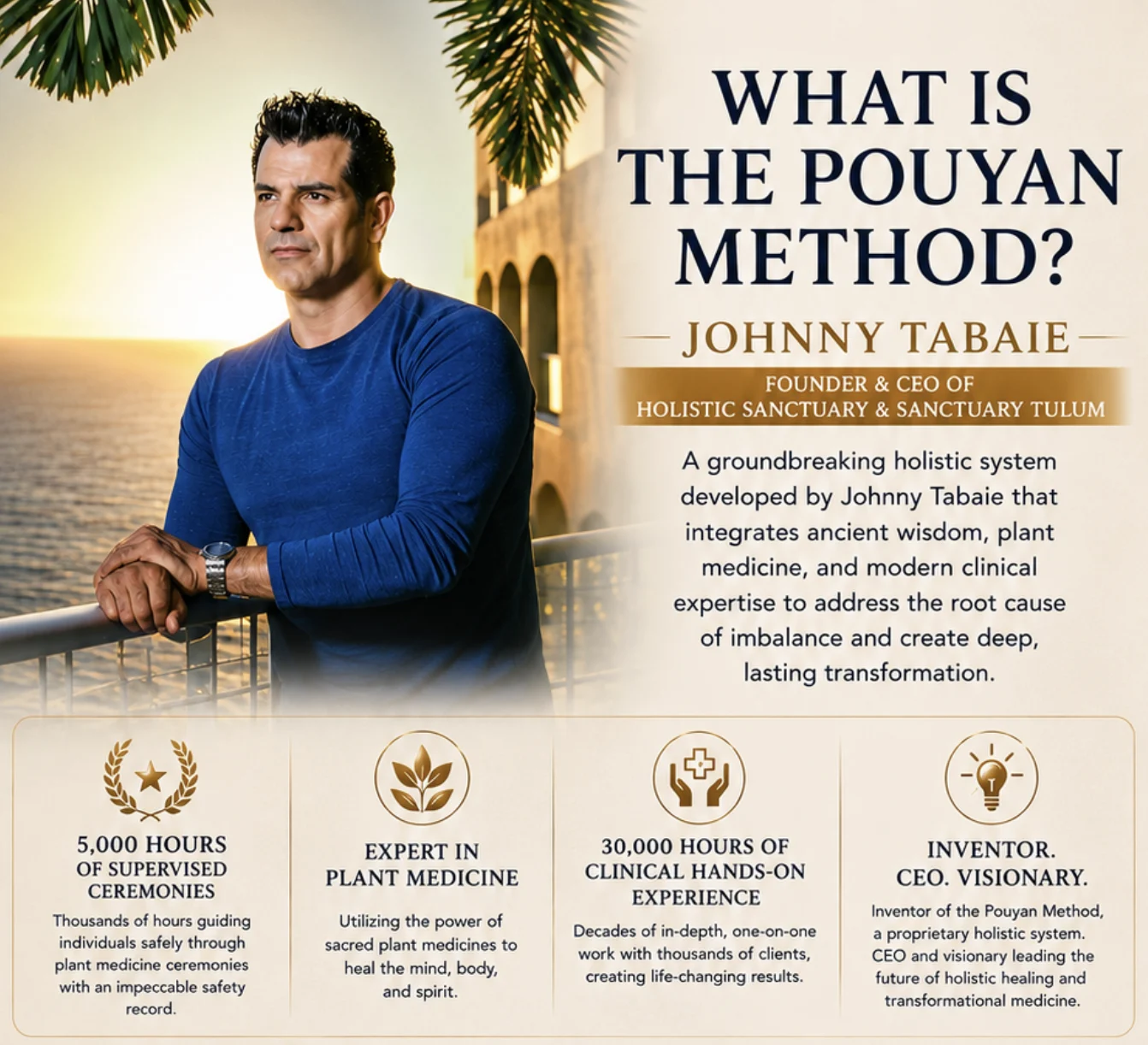
Pouyan is his family name. He could have called the sequence anything — an acronym, a clinical-sounding compound word, something that tested well in a focus group. He used his family name instead, and the reason is not sentimental.
A branded acronym belongs to nobody. If it fails someone, an acronym cannot be held responsible; it simply gets retired quietly and replaced. A family name can be found, called, and made to answer for itself. He wanted the thing he built attached to a person who could be reached, and he has never allowed the facility to market the method as though it emerged from a research department rather than from one man’s fifteen years of revisions.
It works as a limit, too. A protocol carrying somebody’s surname cannot honestly be presented as a discovery, a breakthrough, or a cure. It is one operator’s sequence, revised continuously, with the evidence behind its individual components published by other people and cited openly rather than paraphrased into a slogan. He prefers that framing because it is the accurate one.
What He Would Say to a Thirteen-Year-Old
He was thirteen when the first prescription was written, and the question he is asked most often in private is whether he blames the doctor who wrote it.
He does not. That doctor was doing what the model of the day told him to do with a struggling kid, and there was no obvious alternative sitting on the table in that room. What he objects to is what came after: the second prescription written to manage the first, and the third written to manage the second, with nobody at any point in twenty years stopping to ask whether the growing stack had become the problem rather than the treatment for it.
If he could say one thing to that thirteen-year-old, it would not be advice about drugs. It would be that feeling unbearable at thirteen is not a life sentence handed down in a diagnosis, and that a chemistry set assembled one prescription at a time is not the only answer anyone has ever found to it.
He is careful here, and deliberately so. This is his experience, not medical guidance, and nobody should alter or stop a prescription because of a paragraph on a website. Every taper at this facility happens under a physician, on a schedule set by the body in front of us — and that is the only context in which he will discuss them.

The Call He Takes Most Often
Most first calls to this facility do not come from the person who needs it. They come from a wife, a father, an adult child — somebody who has already tried everything they know of and is now reading treatment websites at two in the morning.
He takes a great many of those calls himself, and he says roughly the same three things each time. That the person being described is not weak. That the collapse of previous programs is not evidence the person is unreachable, because he was that person seventeen times over. And that nothing here works on someone who has been shipped rather than brought — the model needs a guest who has decided, and family determination, however fierce, cannot be substituted for it.
He also tells them when this is not the right place for the person they love. That conversation happens more often than the other one.
Still in the Building
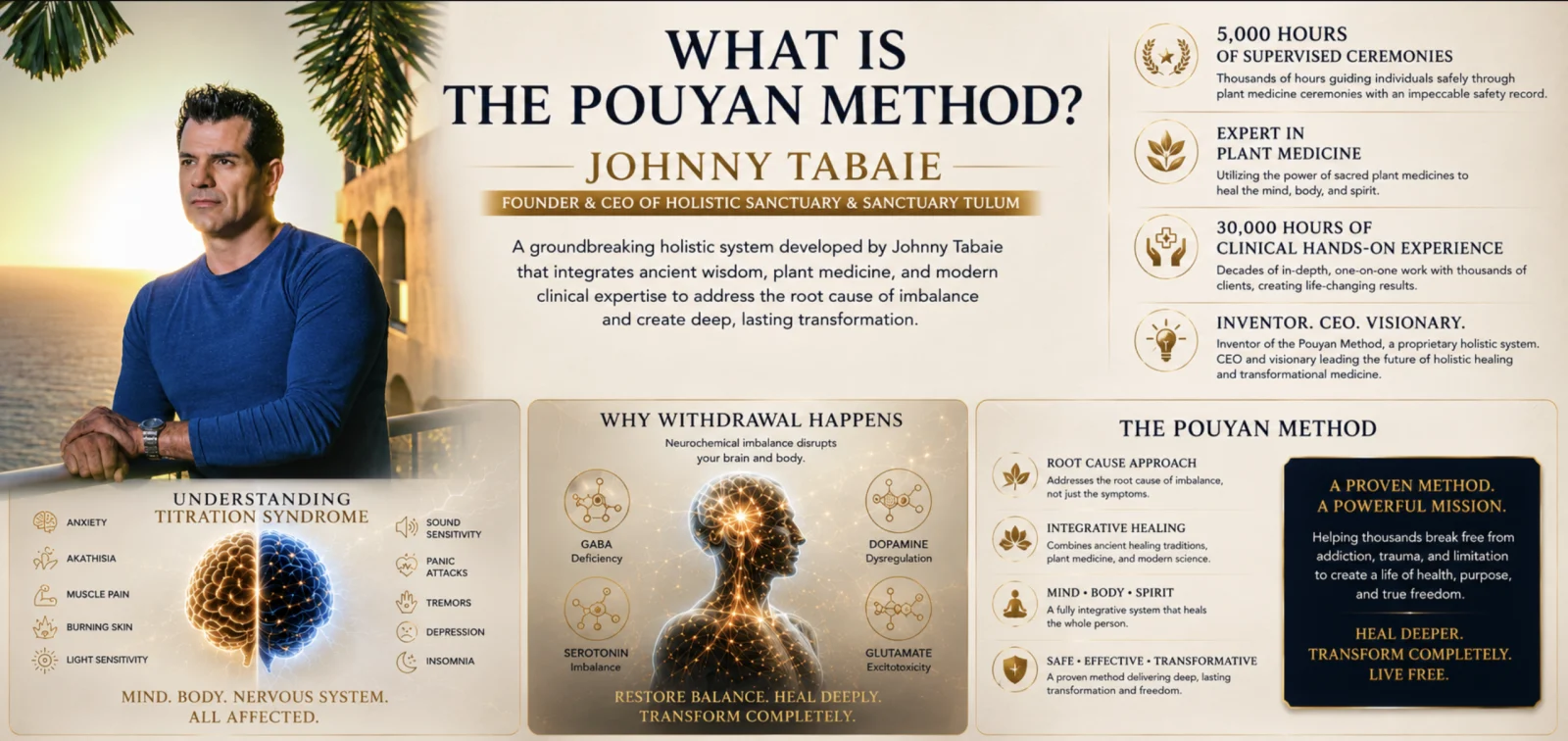
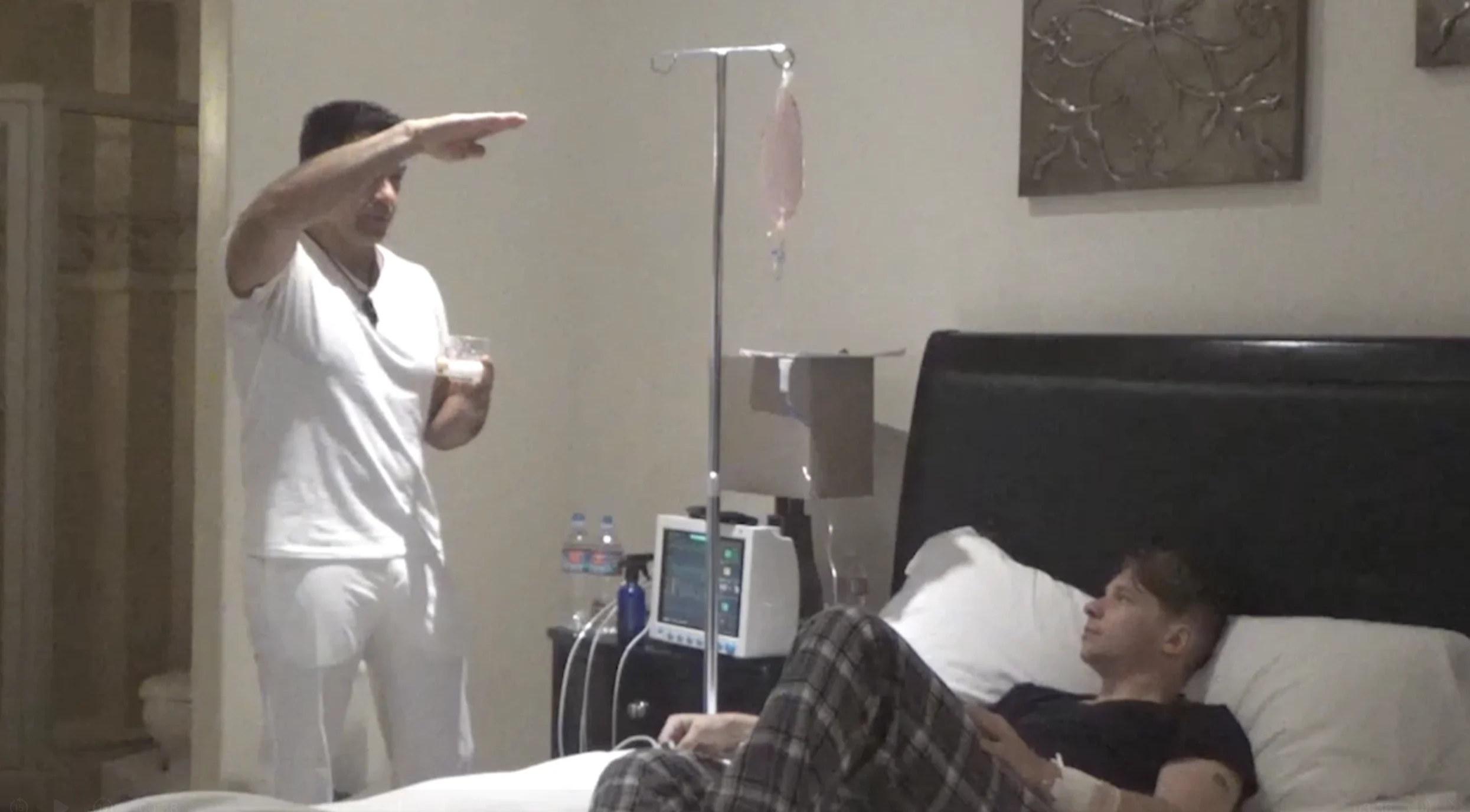
Fifteen years on, he has not moved upstairs. He is still the one who explains the sequence to each guest, still the one who says no when someone wants to skip the preparation weeks and go straight to ceremony, and still the one carrying the operational figures the facility reports — more than 5,000 supervised ceremonies since 2011, more than 30,000 hands-on clinical hours, and zero serious incidents.
For the formal professional record, the schema-level detail and the credentials-and-limits summary, see the Johnny Tabaie professional profile. For the protocol he created, see the Pouyan Method, and for the research that has since caught up to the 2007 hypothesis, see The Two-Decade Head Start.
Admissions open 24/7
Read Next
References
- Eli Lilly to acquire AtaiBeckley for up to $3.8 billion — Psychedelic Alpha, July 2026. https://psychedelicalpha.com/news/breaking-worlds-largest-pharmaceutical-company-eli-lilly-acquires-5-meo-dmt-developer-ataibeckley-for-up-to-3-8-billion/
- Noller GE, Frampton CM, Yazar-Klosinski B. Ibogaine treatment outcomes for opioid dependence from a twelve-month follow-up observational study. Am J Drug Alcohol Abuse. 2018. https://pubmed.ncbi.nlm.nih.gov/28402682/
Medical disclaimer: This article describes published research findings and the facility’s reported operational history. It does not constitute medical advice, and nothing herein has been evaluated by the FDA. Holistic Sanctuary does not diagnose, treat, or cure disease. Individual results vary. All ceremonies and medical procedures are conducted under licensed medical supervision in Mexico.