Alcohol Withdrawal Timeline: Hour by Hour, Day by Day, and the Months After
September 5, 2026
Burnout vs Depression: How to Tell the Difference, and Why It Matters
September 5, 2026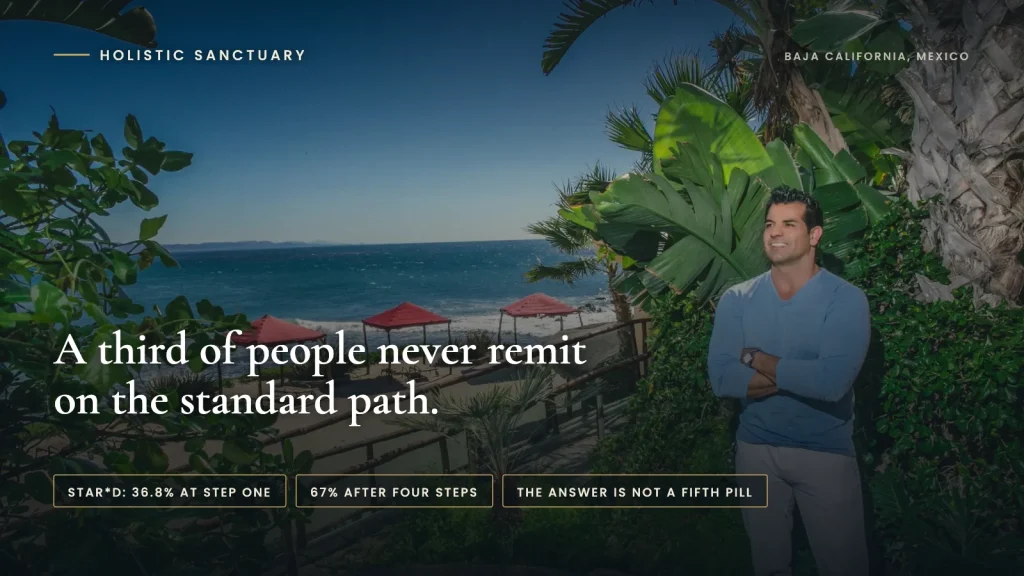

Treatment Resistant Depression: What the Research Shows, and What Has Changed
 Johnny Tabaie, Founder & CEO, Holistic Sanctuary·Medically reviewed by
 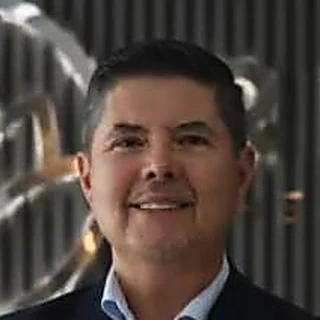 Dr. Jose A. Jimenez, MD, Medical Director·Published · Last medically reviewed
 A third of people never remit on the standard path. What the largest study found, why the medicine fails, what has changed since 2019, and why the answer is not a fifth pill.
Read This Part First
Treatment resistant depression is the diagnosis a person receives after the medicine has failed twice. The working definition, the one the FDA used when it approved the first new drug for it in 2019, is a major depressive episode that has not responded adequately to at least two different antidepressants given at an adequate dose for an adequate time. It is not a rare outcome, it is not a character flaw, and it is not, in most cases, the end of the road.
This page sets out what the largest study ever run on depression treatment actually found, why antidepressants stop working or never start, what has changed in the last few years that the people who told you nothing else could be done have not caught up with, and how treatment resistant depression is approached at Holistic Sanctuary.
The non-negotiable first: do not stop an antidepressant abruptly, and do not stop a benzodiazepine at all without a physician. Antidepressant discontinuation produces its own syndrome, and benzodiazepine withdrawal can be life-threatening. Everything below assumes a physician managing every change. If you are thinking about suicide, call or text 988.
What the Biggest Study Found
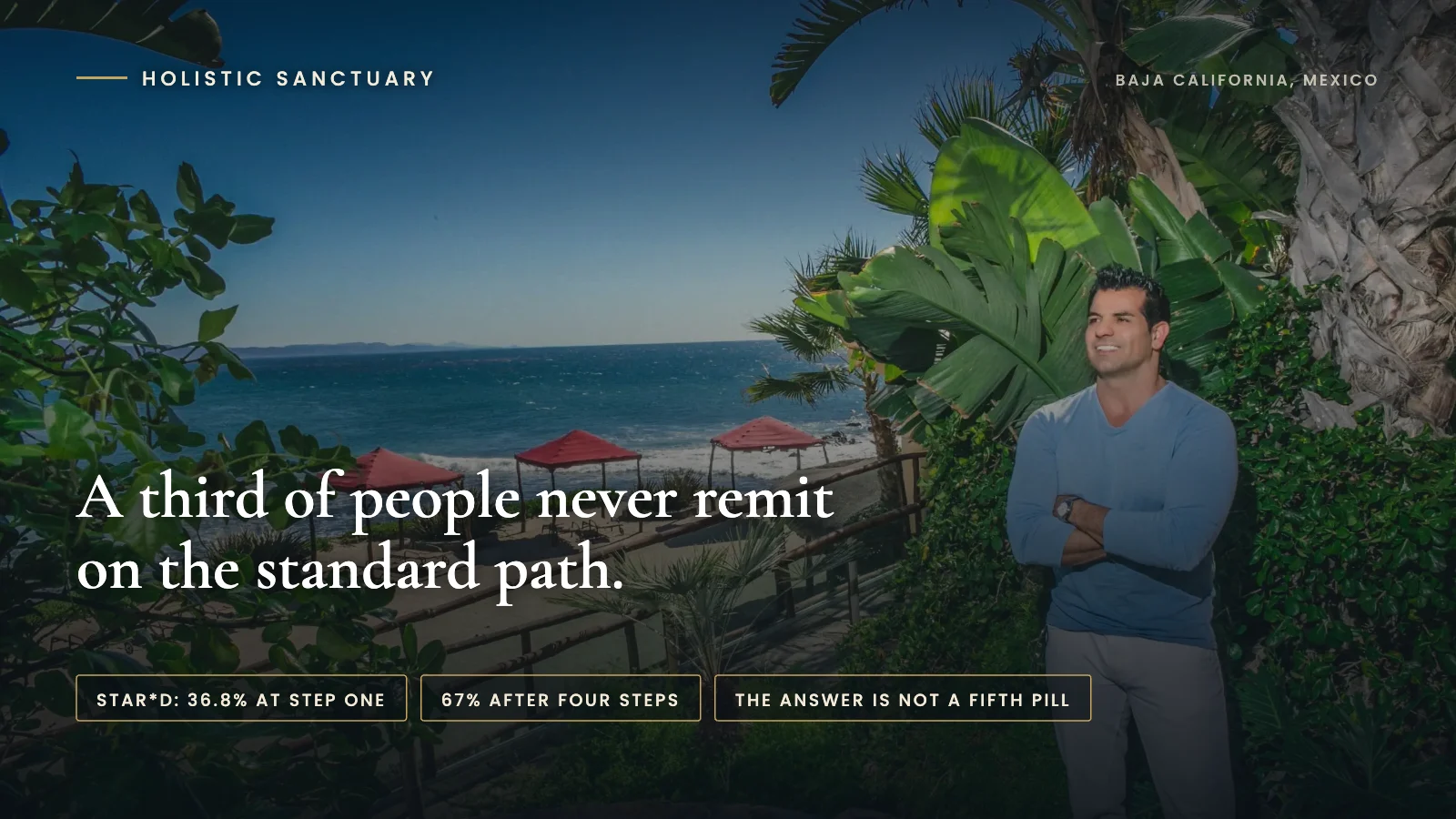
Beginning in 2001 the National Institute of Mental Health ran STAR*D, the largest and longest study of depression treatment ever conducted, with more than four thousand outpatients moved through up to four sequential steps of medication and augmentation. Rush and colleagues’ 2006 summary in the American Journal of Psychiatry gave the field its two most important numbers. After the first step, a standard SSRI, 36.8 percent of patients reached remission. After all four steps, the cumulative remission rate was about 67 percent, and the people who needed the third and fourth steps relapsed more often during follow-up than those who remitted early.
Read plainly, that means roughly one in three people who did everything asked of them, four trials, a year or more, were still depressed at the end, and a good many of those who remitted did not stay well. That is the population the phrase treatment resistant depression describes: not a small group of unusual cases but a third of everyone who sets out on the standard path. The people who arrive here with that diagnosis have usually been on it for years, and have usually been told that the answer is a fifth medication.
Why Depression Resists the Medicine
The honest answer is that treatment resistant depression often describes the treatment more than the depression. Antidepressants act on a narrow set of neurotransmitter systems, and a depression driven by something else will not answer to them however many are tried. Miller and Raison’s 2016 review in Nature Reviews Immunology set out the evidence that inflammation is a driver of depression in a substantial subgroup, that inflammatory markers predict poor response to standard antidepressants, and that the immune system is a legitimate treatment target. A body that is inflamed, sleeping badly, eating badly and sedentary is not a body an SSRI can fix.
Then there are the things that mask as treatment resistant depression and are not. Alcohol, used nightly to sleep, is a depressant that reproduces the illness it is being used to soothe. Benzodiazepines, prescribed for the anxiety that accompanies depression, blunt mood and impair memory with long-term use, and their interdose withdrawal looks exactly like a depressive episode that will not lift.
Thyroid disease, sleep apnea, chronic pain, nutritional deficiency and a dozen medical conditions produce low mood and fatigue that no antidepressant will touch, which is why the first thing that should happen to anyone labeled treatment resistant is a full medical workup, and the first thing that usually happens is a new prescription.
What Has Changed, and Who Saw It Coming
For sixty years the pharmacology of depression moved in one direction, and then it turned. In March 2019 the FDA approved esketamine, a nasal spray derived from the anesthetic ketamine, specifically for treatment resistant depression, the first genuinely new mechanism in decades and an admission that the serotonin model was not enough.
In 2022 Goodwin and colleagues published in the New England Journal of Medicine the largest controlled trial of psilocybin for a treatment-resistant episode of depression: 233 participants, a single 25 mg dose against a 1 mg control, and at three weeks a reduction in depression scores of twelve points against five, with 37 percent responding and 29 percent in remission; sustained remission at twelve weeks was 20 percent, and the trial reported serious adverse events including suicidal ideation in a small number of participants, which is why this work belongs under a physician.
Davis and colleagues’ 2021 trial in JAMA Psychiatry found large, rapid antidepressant effects from psilocybin with supportive therapy in major depression, and Palhano-Fontes and colleagues’ 2019 randomized placebo-controlled trial in Psychological Medicine found rapid antidepressant effects from a single dose of ayahuasca in treatment resistant depression. On April 24, 2026, the FDA awarded national priority vouchers to fast-track review of psilocybin and methylone for mental health conditions, as CNN and Fierce Biotech reported; the Commissioner said the agency would evaluate these potential therapies with urgency.
In August 2026 SAMHSA published a report encouraging states to prepare for psychedelic medicine, on the grounds that it is likely to come whether or not states are ready.
Our founder, Johnny Tabaie, built this program around medically supervised psychedelic therapy twenty years before those announcements, on the conviction that the future of treating depression, addiction, trauma and PTSD would run through these medicines, and on the harder conviction that it would only be worth anything if it was done authentically, medically supervised, and ethically. That is what the last fifteen years here have been spent perfecting: not the medicine alone, which the trials now validate, but the screening, the setting, the physician and the months of care around it that the trials could not provide. Read what ibogaine is and our treatment methods for the detail.
The Body Is Part of the Treatment
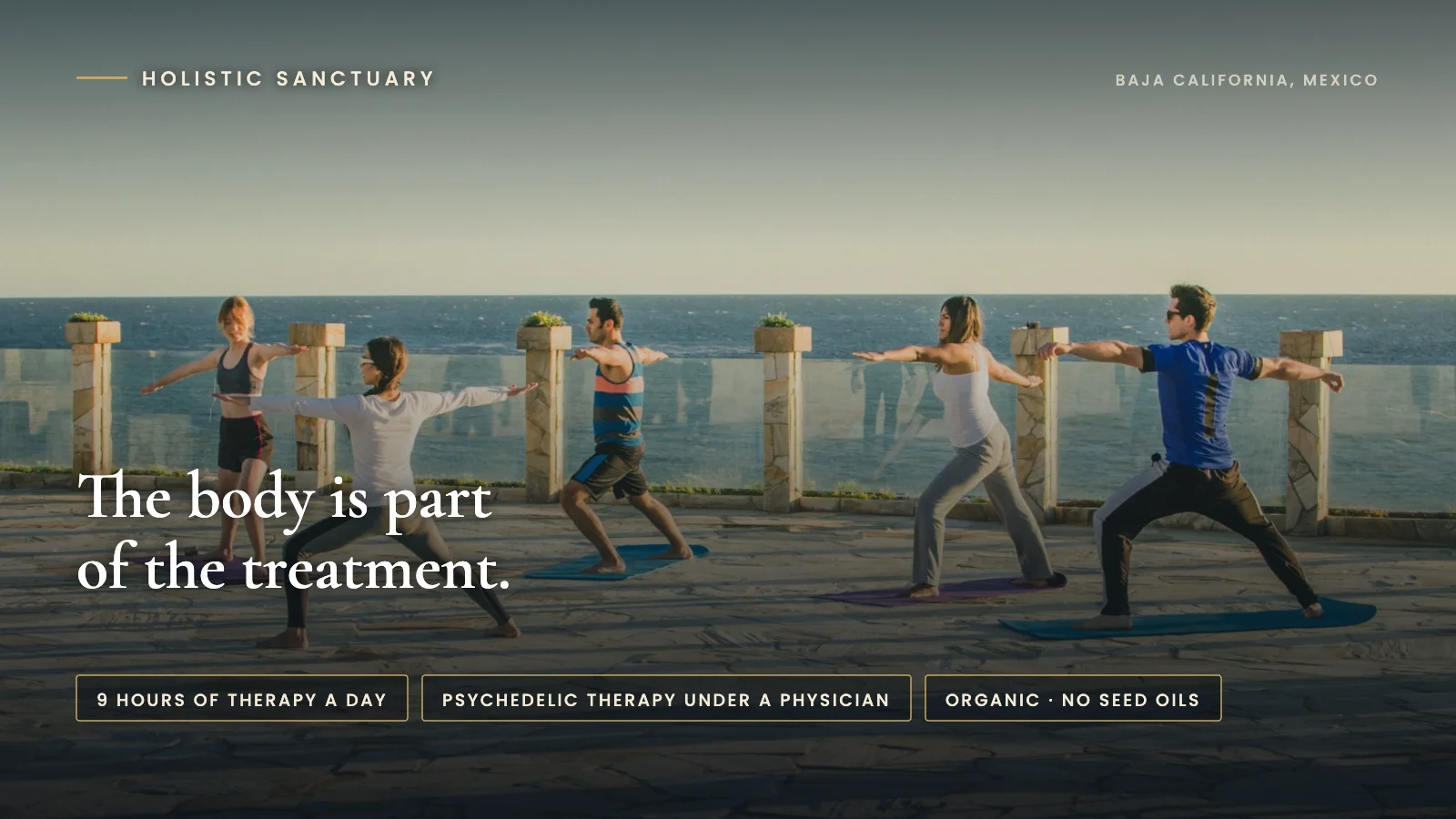
The evidence that the body treats treatment resistant depression is now as strong as the evidence for most of the drugs. Noetel and colleagues’ 2024 network meta-analysis in the BMJ, pooling 218 randomized trials, found that walking or jogging, yoga and strength training each produced meaningful reductions in depression, with more vigorous exercise producing larger effects, and that the benefits held across people with and without other conditions. That is not a lifestyle tip. It is a treatment with an effect size, and it is one that a person spending nine hours a day in bed on a fourth antidepressant is not receiving.
Sleep is the other half of treatment resistant depression. Depression and insomnia feed each other, and a person who has not slept properly in a year cannot be expected to answer to any treatment; sleep is restored by daylight, movement, food, an unhurried schedule and the removal of the alcohol and sedatives that were breaking it. Food is the third: an inflamed body, per Miller and Raison, is a depressed body, and a diet of processed food and seed oils is an inflamed diet.
None of that replaces medicine where medicine is needed. All of it is what a program for treatment resistant depression should have been doing from the first day, and what most have never done.
How Treatment Resistant Depression Is Approached Here
I will describe how treatment resistant depression is approached at Holistic Sanctuary and then say where the claim stops.
Treatment resistant depression begins here with the workup that should have happened years ago: bloodwork including thyroid and inflammatory markers, blood pressure, an EKG, a stress test and an echocardiogram reviewed by our medical director, a full medication and alcohol history, and a physician’s assessment of what is actually driving the depression. If a benzodiazepine or alcohol is part of the picture, that is addressed first, slowly and medically, because no treatment for depression works on a nervous system in withdrawal. Antidepressant changes, where they are made, are made by the physician and gradually.
Then the program, which is not a fifth pill. Programs here run four to twelve weeks, a minimum of four and an average of twelve, and longer when a case needs it, one guest to one clinical team, with around nine hours of holistic therapy a day: massage, reiki, yoga, hyperbaric oxygen, red light therapy, infrared sauna, NAD IV infusions, the Brain Repair IV protocol our founder developed, coffee enemas and daily Dead Sea salt baths, individualized rather than identical. There is no group therapy, no talk therapy in place of medicine, and no psychobabble. There is no strategy of managing treatment resistant depression by adding a dependence-forming medication.
For guests for whom it is appropriate, and only after that screening, licensed and medically supervised psychedelic therapy is available under a physician: ibogaine, ayahuasca, psilocybin and DMT in its forms, each with its own page, its own evidence and its own exclusion criteria, in a private setting with a physician present, which is the condition under which the published trials were run and the condition most of the places now offering these medicines do not meet. Every guest sleeps in a private oceanfront suite on organic sheets and eats organic food with no seed oils and no processed food.
Where the claim stops on treatment resistant depression: we do not claim to cure depression, we do not publish a success percentage, and we do not promise that any medicine, psychedelic or otherwise, will do for you what four antidepressants did not.
What we can say is that the workup is real, the setting is medical, the program is long enough to matter, the psychedelic therapies are offered only where legal and only under physician supervision, and that people with treatment resistant depression who have been told nothing else can be done are, in my experience, the people for whom a longer, individual, medically supervised program that treats the whole body is the first one that holds.
Read about luxury depression treatment and the mental health program. Admission is by medical clearance.
Frequently Asked Questions
What is treatment resistant depression?
A major depressive episode that has not responded adequately to at least two different antidepressants given at an adequate dose for an adequate time. It is the definition the FDA used when it approved esketamine for the condition in 2019, and it describes roughly a third of the people who set out on the standard medication path, according to the STAR*D study.
What did STAR*D show?
In the largest depression treatment study ever run, 36.8 percent of patients remitted on the first antidepressant and about 67 percent had remitted after up to four sequential treatment steps, with higher relapse rates among those who needed the later steps. About one in three did not remit at all.
Does psilocybin work for treatment resistant depression?
The 2022 NEJM trial of a single 25 mg dose found a significant reduction in depression scores at three weeks versus control, with 29 percent in remission at three weeks and 20 percent in sustained remission at twelve, alongside serious adverse events in a small number of participants. In April 2026 the FDA fast-tracked psilocybin’s review. It is promising, it is not a cure, and it belongs under a physician.
Can exercise really treat depression?
For treatment resistant depression as for any depression, a 2024 BMJ network meta-analysis of 218 randomized trials found that walking or jogging, yoga and strength training each meaningfully reduced depression, with more vigorous activity producing larger effects. It is a treatment with an effect size, not a lifestyle tip.
Should I stop my antidepressant before coming?
No. Do not stop or change any antidepressant or benzodiazepine on your own. Any changes are made by the physician here, gradually, after the medical workup, and a benzodiazepine taper, where one is needed, is managed slowly over the whole program.
How does Holistic Sanctuary treat treatment resistant depression?
A full medical workup first, then a four-to-twelve-week individualized program, one guest to one clinical team, nine hours of holistic therapy a day, no group or talk therapy, no dependence-forming medication as the plan, and, for guests who are screened and cleared, licensed medically supervised psychedelic therapy under a physician. No outcome is promised.
References
- Rush AJ, et al. Acute and longer-term outcomes in depressed outpatients requiring one or several treatment steps: a STAR*D report. Am J Psychiatry. 2006;163(11):1905–1917. pubmed.ncbi.nlm.nih.gov
- Miller AH, Raison CL. The role of inflammation in depression: from evolutionary imperative to modern treatment target. Nat Rev Immunol. 2016;16(1):22–34. pubmed.ncbi.nlm.nih.gov
- NPR. FDA approves esketamine nasal spray for hard-to-treat depression. March 5, 2019. npr.org
- Goodwin GM, et al. Single-dose psilocybin for a treatment-resistant episode of major depression. N Engl J Med. 2022;387(18):1637–1648. nejm.org
- Davis AK, et al. Effects of psilocybin-assisted therapy on major depressive disorder: a randomized clinical trial. JAMA Psychiatry. 2021;78(5):481–489. pubmed.ncbi.nlm.nih.gov
- Palhano-Fontes F, et al. Rapid antidepressant effects of the psychedelic ayahuasca in treatment-resistant depression: a randomized placebo-controlled trial. Psychol Med. 2019;49(4):655–663. pubmed.ncbi.nlm.nih.gov
- CNN Health. FDA moves to fast-track review of psilocybin and methylone for mental health. April 24, 2026. cnn.com
- Fierce Biotech. Compass, Usona and Transcend score FDA national priority vouchers. April 24, 2026. fiercebiotech.com
- Substance Abuse and Mental Health Services Administration. Current Research, Regulatory, and Policy Considerations: Psychedelics Medicine. PEP26-01-004, August 2026. library.samhsa.gov
- Noetel M, et al. Effect of exercise for depression: systematic review and network meta-analysis of randomised controlled trials. BMJ. 2024;384:e075847. pubmed.ncbi.nlm.nih.gov
Medical disclaimer: this page is general information about treatment-resistant depression and is not medical advice. Do not stop or change an antidepressant or benzodiazepine without a physician. Holistic Sanctuary does not diagnose, treat, or cure disease; individual results vary and no outcome is promised. Psychedelic therapies are provided only where legal, after medical screening, under physician supervision, and are not approved by the FDA for these uses. In an emergency call 911. If you are thinking about suicide, call or text 988.